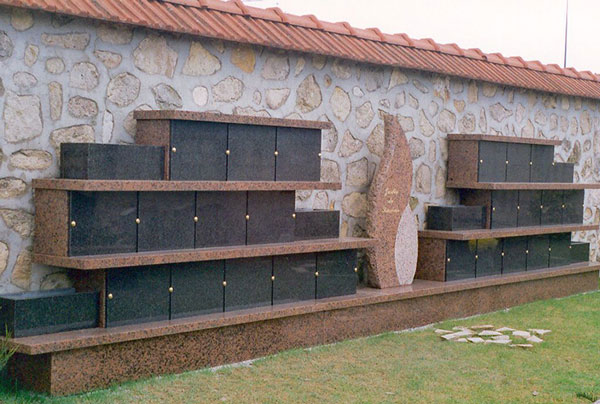
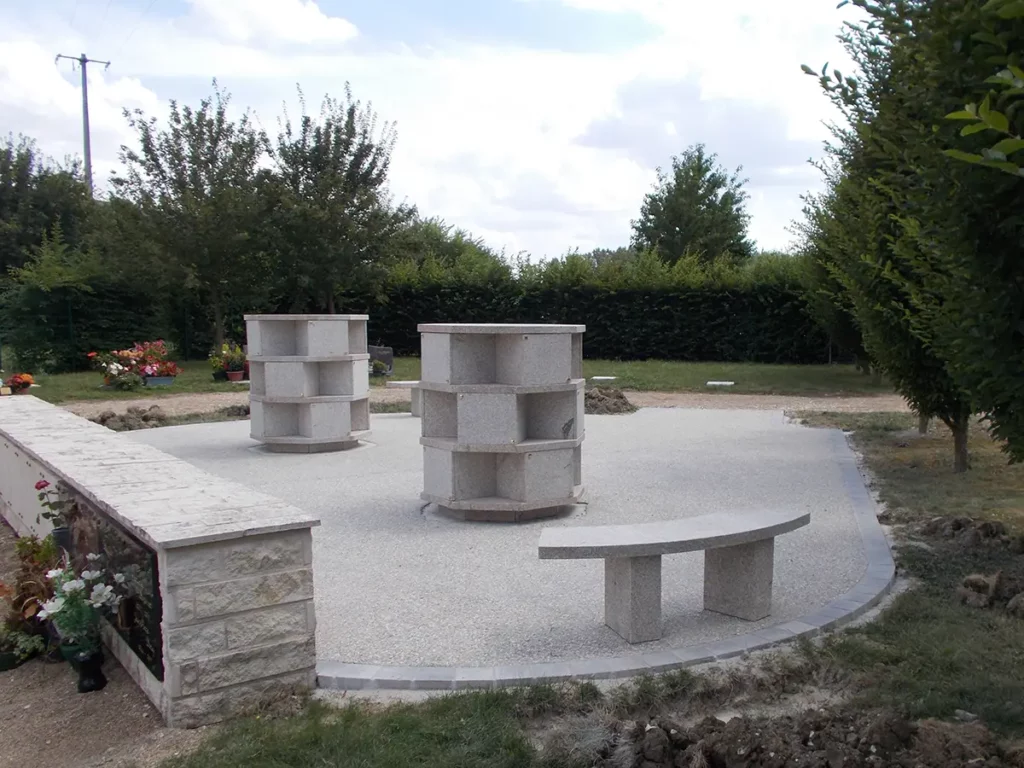
A vault is a funerary structure designed to house mortal remains, with the burial site located underground. It is often surmounted by a funerary monument to identify the deceased or facilitate remembrance.
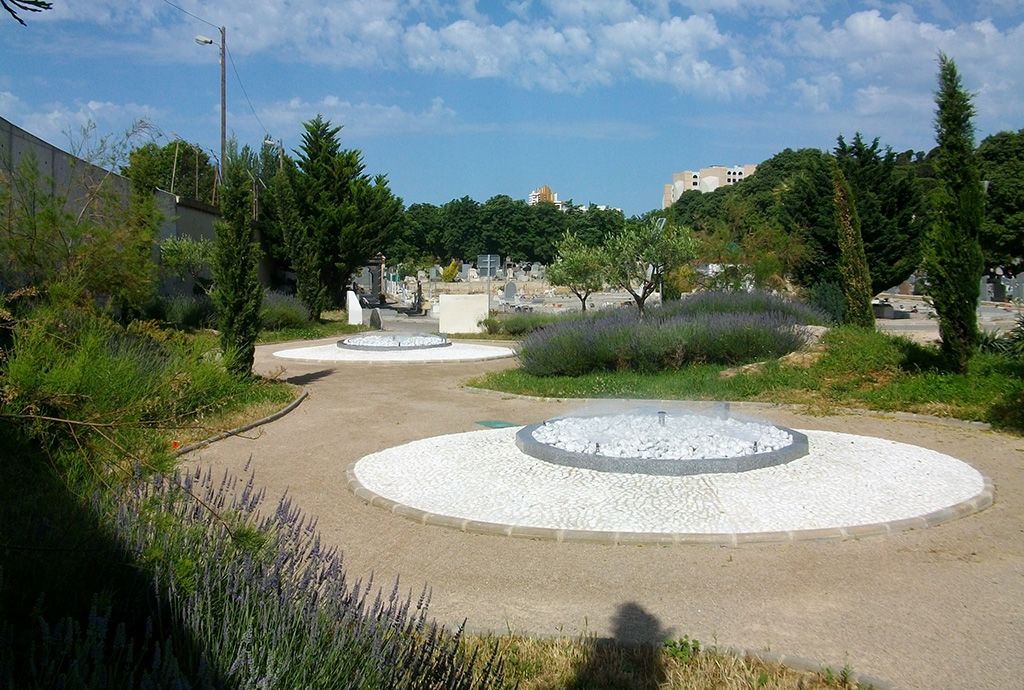
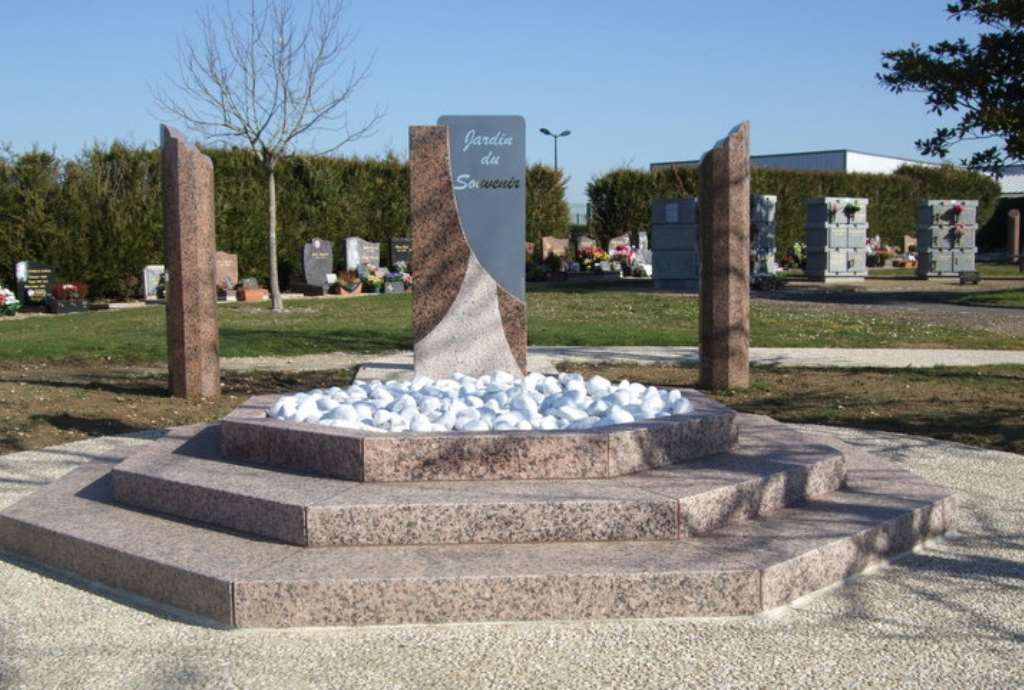
Theossuary, an old vault or a simple grave, has a definitive and perpetual purpose. It is designed to receive mortal remains from repossessed graves and concessions.
Although vaults and ossuaries are both intended to house mortal remains, there is one fundamental difference: vaults are privately managed, while ossuaries are managed by municipalities. Find out more about the characteristics of vaults and ossuaries, and the obligations associated with these funeral facilities.
Features of a burial vault
What is a burial vault?
The burial vault is a form of burial for the deceased and their families. It is composed of several compartments, making it possible to accommodate several coffins, generally for members of the same family.
Also known as a "funeral vault" or "family vault", the vault is a masonry or prefabricated structure within a cemetery. The individual compartments, each accommodating a coffin, are separated by concrete slabs, with coffins placed one on top of the other within the same vault.
Cinerary urns may also be placed alongside coffins in the vault. In fact, this is indicated in circular no. 73-545 of November 19, 1973 from the French Minister of the Interior. This circular specifies that families requesting authorization "to deposit in their vault a number of cinerary urns greater than that of the vault's compartments, whether or not these compartments are already occupied by coffins" must be granted.
When a small vault contains only urns, it is called a cavurne.
How do I maintain a vault?
Vaults are managed privately. It is therefore the responsibility of the concession-holder to clean and maintain the plot. Indeed, "the concession-holder must keep the plot in a clean and well-maintained condition".
Concession-holders or their families are therefore responsible for regular cleaning (soil, dead leaves and flowers, multiple soiling, etc.), as well as for ensuring the regularity of the monument (solidity, watertightness, etc.) and carrying out any necessary work.
The abandoned concessions may be repossessed by the mayor's office in accordance with article 2223-17 of the Code Général des Collectivités Territoriales. It is therefore important to take care of these funerary monuments.
How do you allocate spaces in a vault?
To determine who may be buried in the vault, you need to consider the type of plot you have chosen.
- An individual plot: intended for the sole concession holder or the designated person mentioned on the deed;
- A collective plot: intended for the persons named on the plot deed, whether or not they are family members;
- A family plot: intended to accommodate, in addition to the body of the concession-holder, those of his or her spouse, successors and their spouses, ascendants, relatives and adopted children, or even those of persons linked to the concession-holder by ties of affection. [CE, sect., October 11 1957, Cts Hérail: AJDA 1957, p. 429, concl. Kahn. - Rép. min. n° 21280 : JOAN Q 22 janvier 1990, p. 368]
The number of burials that can be made in a plot depends on the number of spaces available. The rule of first come, first served applies in principle to the allocation of spaces: the order of death therefore determines the order in which the plot is occupied.
However, case law varies on this point. As the rights of concession holders are limited by those of others, it is possible for them to oppose any burial of a third party if the burial of a third party could deprive them of their right to be buried. [TGI Bordeaux, April 20, 1959, GP, September 15, 1969; TI Cagnes-sur-Mer, September 6, 1972, D. 1974, p. 551, note R. L.]
Ossuary features
What is an ossuary?
The ossuary is designed to receive the mortal remains of exhumed bodies from repossessed graves. Below you'll find the different cases leading to the administrative recovery of concessions:
- of the common ground at the end of 5 years or at the end of the rotation period set by the municipal cemetery regulations;
- concessions that have expired after a period of 2 years;
- concessions in a state of abandonment at the end of the takeover procedure, which lasts 3 years and 6 months.
So, when a plot has lapsed and the family has not wanted to claim the remains of the person buried there, they are placed in the ossuary.
The presence of an ossuary is mandatory for communes, and must be "arranged" in accordance with law no. 2008-1350 of December 19, 2008, since it is not possible to cremate the remains of a person whose opposition to cremation is known or attested.
What legislation applies to ossuaries?
The space
Once a plot or monument has been designated as an ossuary, it can no longer be moved or disused. The designation is perpetual and definitive. The location of the ossuary must therefore be a carefully considered decision before the construction project is launched.
What if your commune doesn't have enough space to build an ossuary?
There are several possibilities:
- the remains may be transferred by decision of the mayor to the ossuary of another cemetery belonging to the commune;
- the remains may be transferred under the same conditions to the territory of another commune belonging to the same group of communes (syndicat de communes, district or urban community);
- the ashes of exhumed remains are deposited in a columbarium, in the ossuary or scattered in the specially designated place provided for in article R. 2223-9.
The bones
Before bones can be placed in an ossuary, many communes require them to be "white". In other words, they must be cleaned of all traces of flesh.
However, this precaution in no way implicates the legal responsibility of the commune. For funeral concessions, art. R 2223-20 of the CGCT states that when the mayor "proceeds with the exhumation of the remains of buried persons. For each plot, these remains are placed in an appropriately sized coffin", while art. R. 2213-42 (paragraph four) states that: "When the coffin is found damaged, the body is placed in another coffin or in a bone box". This means that bodies can be placed in the ossuary at any stage of decomposition.
The identity of the deceased
The names of those buried, even if no remains have been found, are recorded in a register available to the public, and may be engraved on a device made of durable materials in the area specially designated for this purpose, or above the ossuary.
How to maintain an ossuary
According to article L. 2223-4 of the CGCT, which was amended by law no. 2008-1350 of December 19, 2008 and no. 2011-525 of May 17, 2011, the legislation concerning ossuaries is as follows:
"An order of the mayor allocates an ossuary in the cemetery in perpetuity, where exhumed remains are immediately reburied.
The mayor may also proceed with the cremation of exhumed remains in the absence of known or attested opposition from the deceased.
The remains of persons who have expressed their opposition to cremation are kept separate in the ossuary.
Located in the communal cemetery, management of the ossuary is the responsibility of the municipality. Cleaning and maintenance are therefore the responsibility of the Town Hall.
While the location of the ossuary is perpetual, the bones are not. In fact, for various reasons, the bones may have to be moved:
- Work needs to be carried out on this ossuary, so it must first be cleared.
- The bones deposited in the ossuary were not respectful of the dignity of the deceased. The "indecent state" of this ossuary has been noted and must be remedied.
Lack of space
There are two main responses to the lack of space in an ossuary.
The first concerns the cremation of mortal remains, for those who have not expressed a wish to the contrary. The ashes of the deceased must then be redeposited in the ossuary.
The second response to a lack of space would be toenlarge the ossuary or create a new one. In fact, under no circumstances is it possible to remove bones from an ossuary to free up space in it, as this would constitute a breach of the respect due to the dead. [Ministerial response published in the JO: Assemblée nationale on April 23, 2013]
Burial vaults and ossuaries
In this article, we've outlined the main features and differences between burial vaults and ossuaries. If you have any further questions about these cinerary monuments, please do not hesitate to contact us.