After the death of a loved one, families must organize the funeral and, in the absence of any wishes left by the deceased, choose between burial or cremation. According to a CSNAF study, almost one French person in two anticipates his or her death by leaving instructions or recommendations. Yet the decision is not a trivial one, and can be difficult to make, often based on highly personal assessments. What are the differences between these two funeral rites? And how can you make the best possible choice? Granimond explains it all.
Burial, a widespread funeral custom
To inhume (or bury) a deceased person is to place his or her body in the ground and create a grave dedicated to his or her memory. It is a funerary practice practiced in most cultures.
Burial usually takes place in a cemetery:
- that of the commune where the deceased resided
- the one in which he died or
- that of the family vault.
In mainland France, burial must take place at least 24 hours and no later than 6 days after the death, and requires authorization from the mayor of the chosen commune. Abroad or in overseas territories, this period is set at 6 days from the time the body enters France.
The deceased is then buried in a concession, i.e. a plot in the cemetery whose use has been purchased. A concession deed is then drawn up, specifying the purpose of the plot (individual, collective or family) and its duration (temporary, thirty-year, fifty-year or perpetual). If the deceased did not own a plot, he or she is buried in common ground, in an individual plot provided free of charge by the commune for a period of at least 5 years.
Relatives are free to choose the funeral operator who will, among other things, take care of the arrangements between death and burial. Depending on the services chosen, the cost of a burial varies. Nevertheless, the cost is sufficiently high because of the marble work involved.
Do you need the support of a cinerary space specialist? Our expert teams are here to help!
Cremation, a time-honoured practice that is becoming increasingly popular
Cremation, not to be confused with incineration which refers to the treatment of waste rather than bodies by an incinerator, is becoming increasingly widespread in France. In fact, the growing trend towards cremation continues. In 2005, 39% considered cremation, rising to 41% in 2007, 44% in 2009 and 51% in 2019.
This funeral practice, which is very old in some cultures, involves burning and reducing a human body to ashes in a crematorium. It must take place within the same timeframe as a burial, and also requires the authorization of the mayor of the place of death or of the place of burial, if the body is being transported.
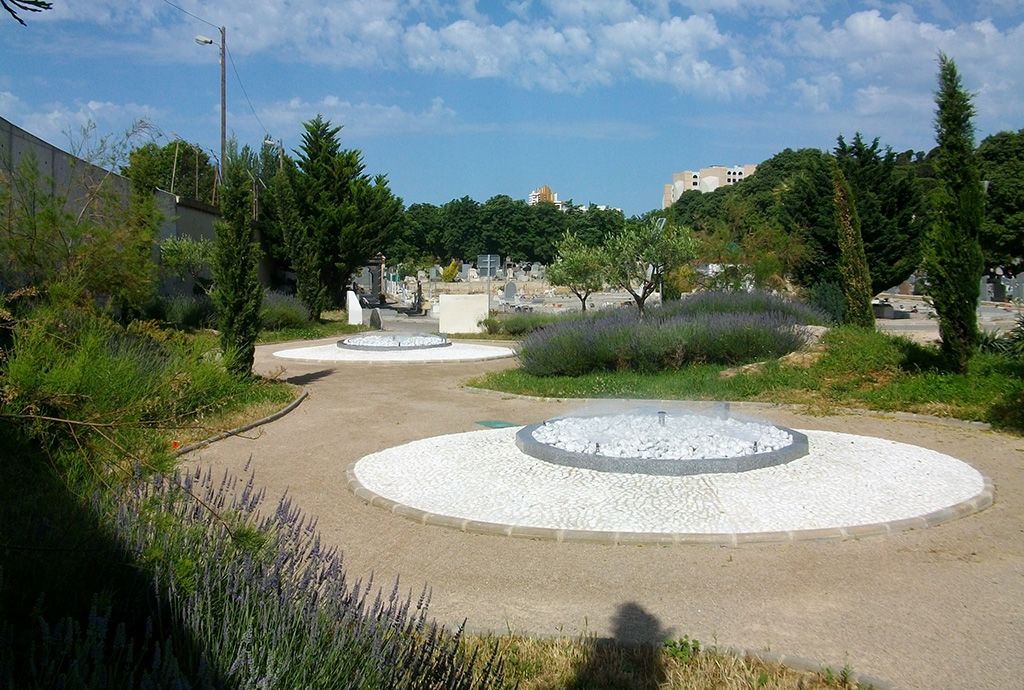
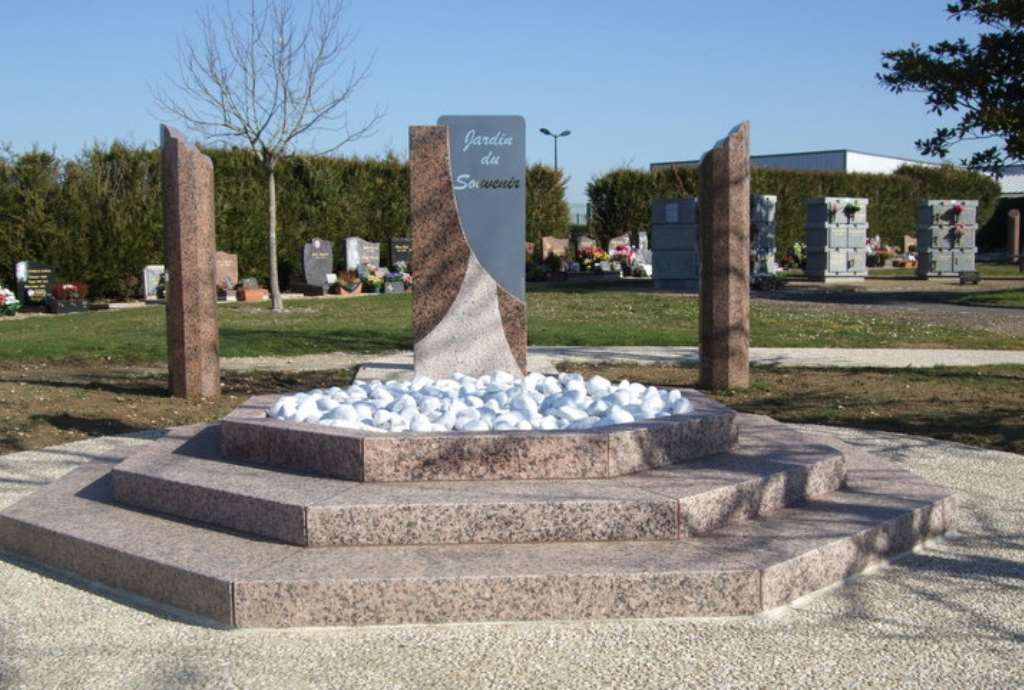
Since 2008, all municipalities with a population of 2,000 or more have been required by law to have at least one cinerary space in their cemeteries by January 1, 2013. Ashes can therefore no longer be kept at home, but preserved or scattered in this dedicated space.
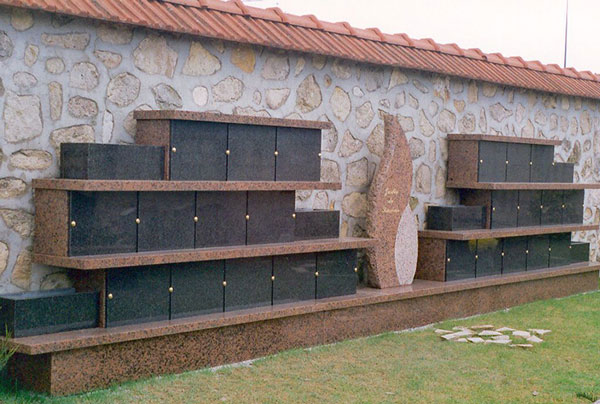
After the cremationrelatives may choose to deposit the cinerary urn in a collective space, a columbariumwhich can accommodate one or more urns. They can also choose to scatter the ashes in the garden of remembrancea collective space set aside for this purpose in the cemetery. The urn can also be placed in the ground, in a small individual vault, a cavurne.
Burial and cremation: what you need to know
Whether it's burial or cremation, it's an intimate choice that's important to discuss while you're still alive, so that your last wishes can be respected by your loved ones. As with burial, the choice of funeral provider for cremation is free. Costs also vary according to the services required. Cremation ceremonies are often misunderstood by families, and can be apprehensive. However, in the vast majority of cases, crematoria offer a moment of farewell and recollection before the cremation, as well as the possibility of a religious blessing in the presence of an officiant.
The Granimond team