In accordance with the law of December 19, 2008, which came into force on January 1, 2013, municipalities with more than 2,000 inhabitants are required to create a cemetery space in their cemeteries. The aim? To accommodate the ashes of the deceased after cremations. Are you a municipality with questions about the layout of your cemetery? Granimond explains everything you need to know about setting up a memorial garden or columbarium.
Scattering ashes: how to create a memorial garden?
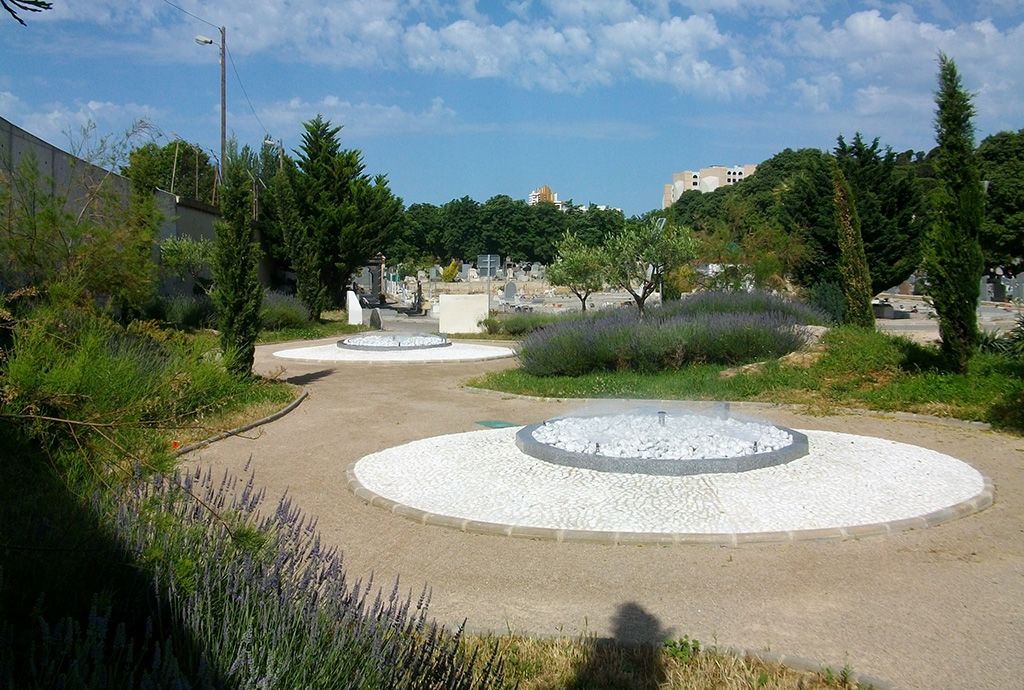
A remembrance garden is a space for scattering the ashes of cremated remains.
The scattering of ashes is carried out by the person organizing the funeral. However, there are alternative solutions, such as the disperser, a technique that is still not widely used. This works by means of an urn, the bottom of which is partially opened by the hand of the master of ceremonies, who spreads the ashes evenly by swinging his arm.
The garden of remembrance can be arranged using natural elements. The identity of the deceased must be recorded on a a special to facilitate family remembrance.
Finally, please note that the choice of ashes scattering must be notified to the town hall where the cemetery is located.
Granimond Memorial Gardens
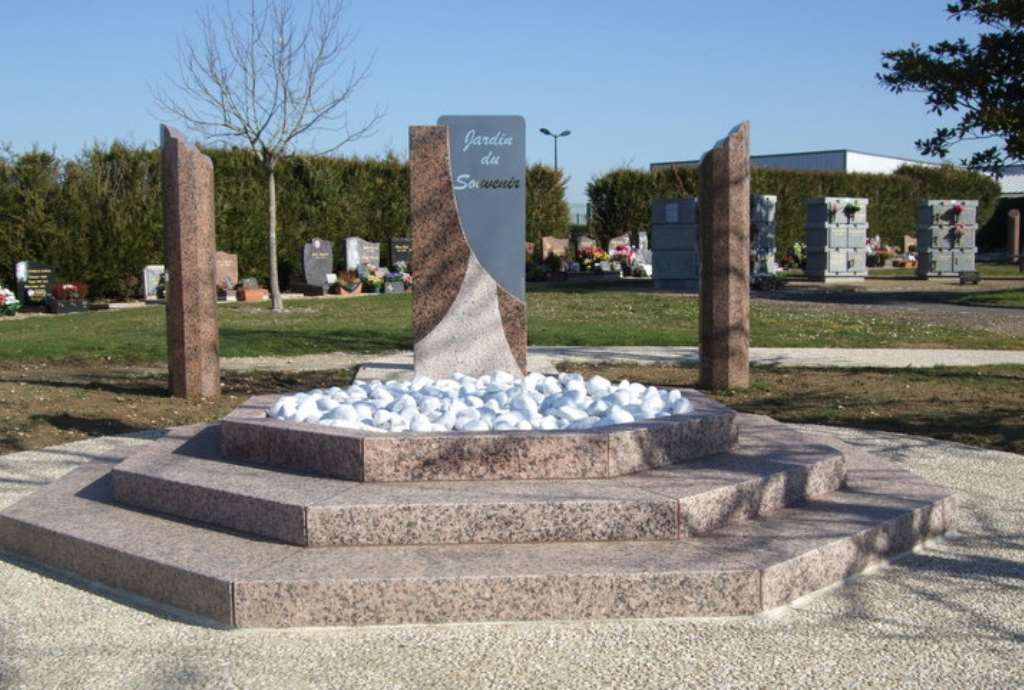
Specialist in cinerary managementGranimond can help you design your garden of remembrance. In fact, we offer remembrance gardens that can be composed of :
- Borders delimiting the space
- A set containing a bottomless sump and pebbles;
They are all accompanied by :
- or a column indicating the identity of the deceased.
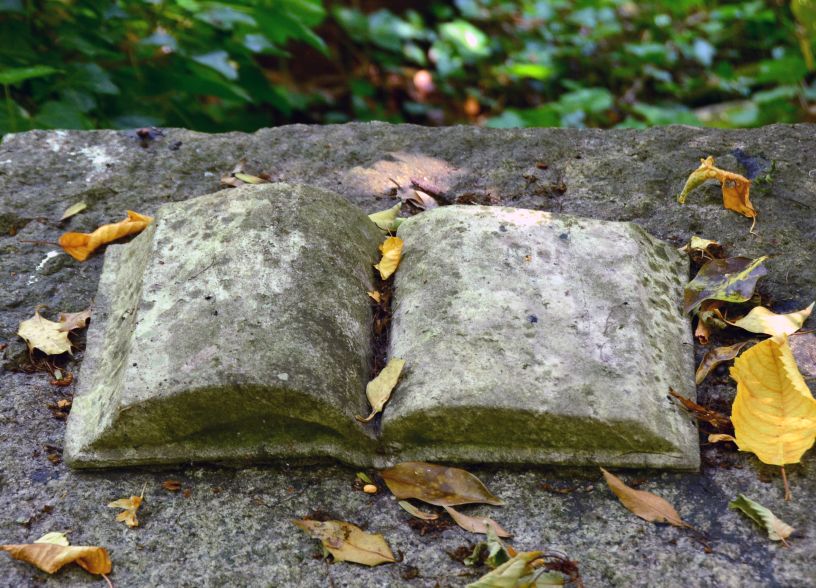
- or a book of remembrance indicating the identity of the deceased.
- and a stele to identify the space.
We have also created a space for scattering ashes using a water sprinkling process: the "Lacus-Regia".Lacus-Regia". This patented process gently carries the ashes under the pebbles. Families can perform this gesture using an optical eye. They scatter their loved ones' ashes with respect and dignity. What's more, the system is environmentally friendly, as it is powered by a photovoltaic panel.
However, a garden of remembrance may not be suitable for the family of the deceased. For, as you will have realized, it is a collective place that may not be suitable for contemplation. In this case, the columbarium is more appropriate.
Need help setting up a cinerary space in one of your cemeteries? Call on our teams!
Scattering ashes: how do you set up a columbarium?
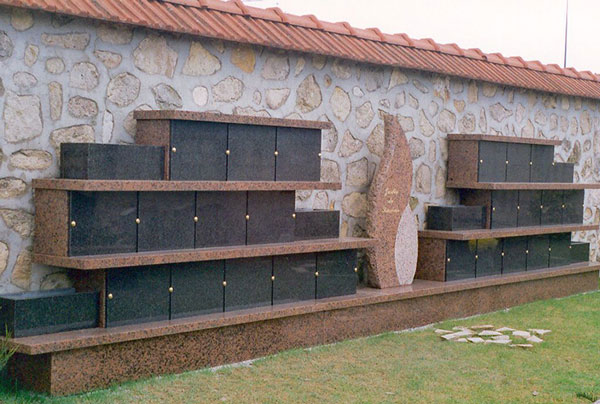
A columbarium is a piece of furniture built above ground in a cemetery. A columbarium requires the purchase of a concession (15 to 30 years) from the town hall responsible for the cemetery.
The ashes of the deceased can be collected in cinerary urns, which are then placed in a columbarium. There are collective columbariums (a cinerary space with several compartments) and individual columbariums (with a single compartment).
Individual columbariums often feature floral borders to encourage each family to pay their respects.
Granimond columbariums
Granimond creates quality cinerary arrangements in solid granite. This noble material is weather-resistant and resistant to external aggression. Many of our columbariums feature individual flower overhangs to encourage contemplation.
Granimond also takes into account the aesthetic and harmonious aspect of its columbariums, providing a variety of colors and shapes to suit your needs. Our aim is for our columbariums to blend in with your site and harmonize with your existing furniture.
We offer a wide range of columbaria for this purpose:
- Half-elevation columbaria;
- Raised columbaria ;
- Ground columbaria ;
- Entry-level columbariums ;
- Tailor-made columbariums.
How should a cemetery be designed to accommodate the ashes of the deceased? Things to remember
Since January 1, 2013, and in accordance with the law of December 19, 2008, all municipalities with more than 2,000 inhabitants are required to set up a cinerary space in their cemetery(ies). Granimond helps you comply with this legislation by assisting you with the layout of your cinerary spaces, offering a wide choice of columbarium and remembrance garden.