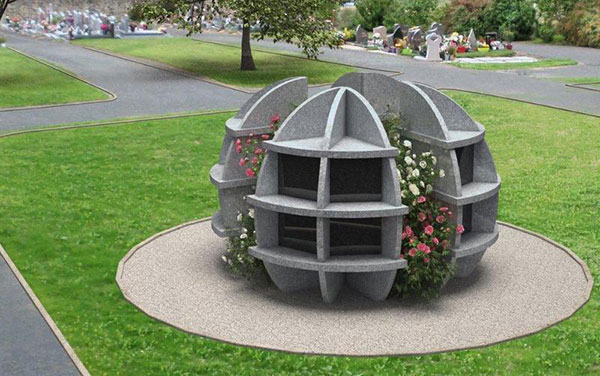
Since 2008, municipalities with more than 2,000 inhabitants have been required to provide at least one cinerary site for the ashes of the deceased. The aim of this law is to meet the needs of today's families, and also to anticipate the steady rise in cremations in France (around 450 a day), which require a separate place in the cemetery.
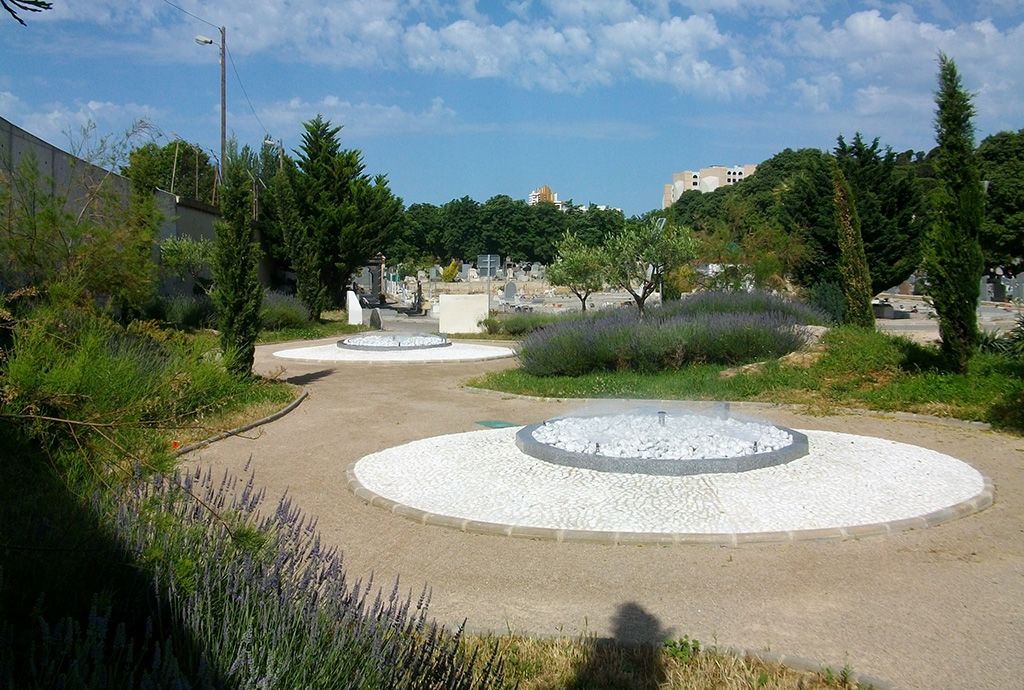
To comply with the law, town halls have several options, including the installation of one or more columbaria. This cinerary monument is made up of "niches" where families can store the urn of a deceased person.
How a columbarium works
A columbarium is an aesthetic, practical and well-appointed monument that can accommodate dozens of urns. The installation of a columbarium enables municipalities to offer a place of remembrance to families who have opted for cremation.
Depending on the needs of your community and future forecasts for the number of deceased, you can choose between a collective or individual columbarium.
Collective columbarium
This monument can take different shapes (rectangular, pyramidal, spherical...). It contains the funerary urns of several people, carefully arranged in separate compartments, each compartment symbolizing a single family.
Individual columbarium
The huts are personalized and their location is left to the family's choice. In most cases, they are placed directly on the ground. Obviously, this type of columbarium takes up more space than the collective version. It's up to the municipality to judge the available space, in relation to the needs of its residents, to choose the type (and number) of columbarium to place in its cemetery.
To obtain a plot in a columbarium, the family must acquire a concession for a limited period, which varies from one commune to another. Your town hall should have all the necessary documentation to guide the deceased's next of kin through this process.
The look of a columbarium
There are many different types of columbarium:
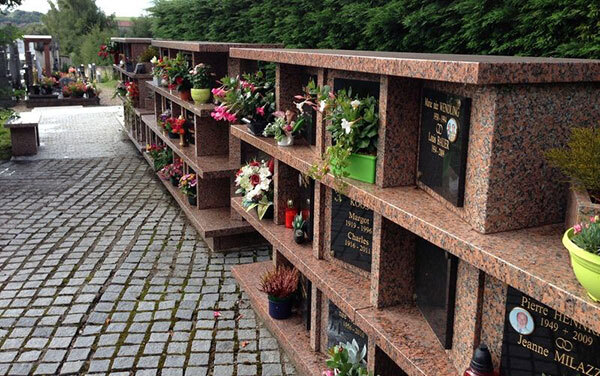
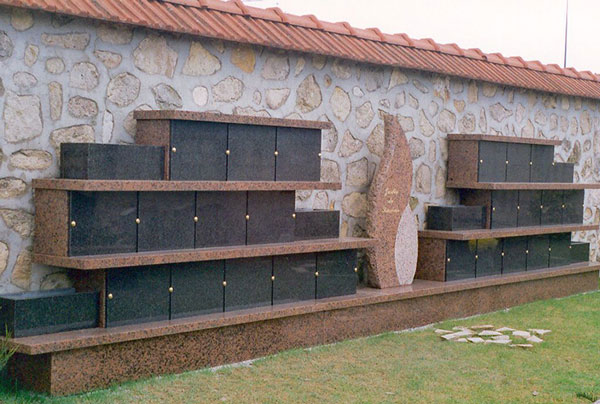
- Granite wall (or other type of stone): this is a classic storage system in the form of aligned racks. Often positioned against a wall, or forming a central aisle, this monument is practical. They can easily be placed in any type of cemetery. Granite is a noble material, very solid and durable.
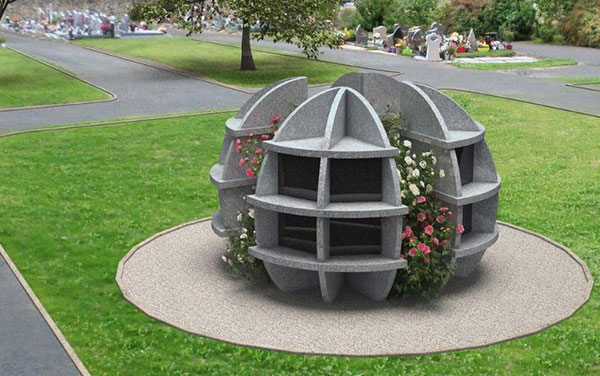
- Globe: more compact than a wall, the globe columbarium is exclusive to Granimond. An aesthetic, spherical and modular monument, it is available in a range of granites and colors. You can choose to place several at your convenience in your cemetery.
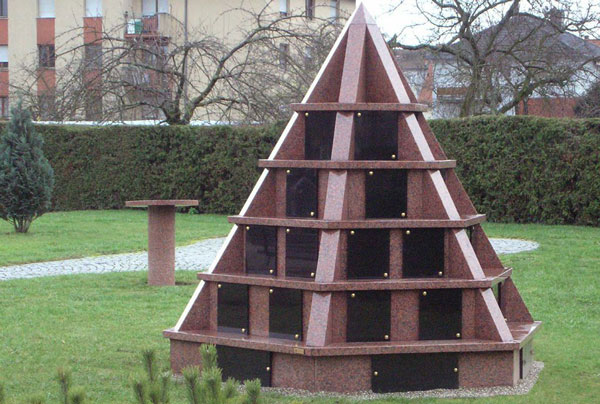
- Pyramid: to give relief to this cinerary monument, manufacturers come up with more original shapes. You'll find pyramid-shaped columbariums, which add a warm touch to your place of remembrance.
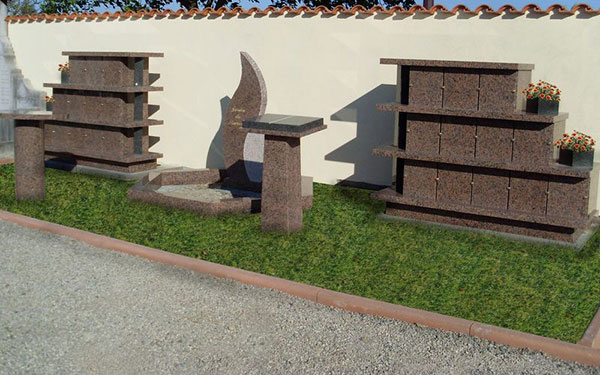
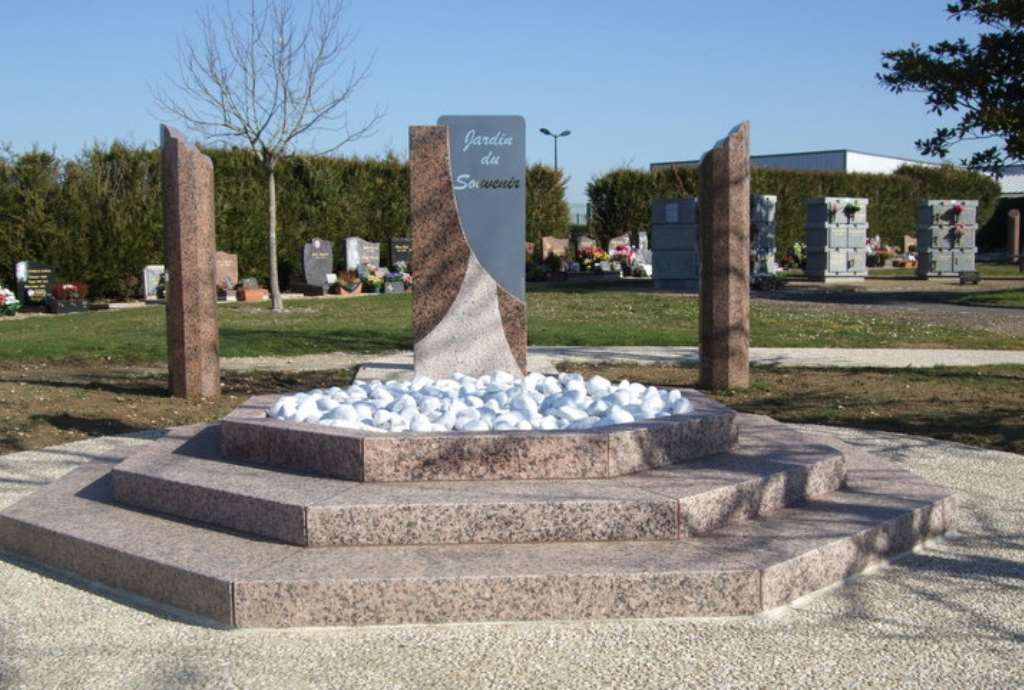
- Column: columbaria are also available in column form. Just as practical as granite walls, these columns can be placed along an aisle or form a dedicated space for ashes. The special feature of these modules is that they offer a high return on investment.
- Custom-built: some professionals also offer custom-built constructions to suit the space available in your cemetery.
The lids of the plots are sealed by the undertakers, and an identification plate can be affixed to each one. This will be engraved at the time of placement of the urn. It includes the surname and first name of the deceased, as well as the date of birth and death, not forgetting the plot number issued by the commune.
The price of a columbarium plot for a private individual
Concessions available from the Mairie give access to a columbarium plot. All you have to do is apply the local burial regulations. Generally speaking, a plot is rented for a limited period of time (from 15 to 50 years, with most families opting for 30 years).
Rates vary, but range from around 500 euros for a 15-year plot to over 700 euros for a 30-year plot. These rates are indicative and, once again, can be adapted according to the commune concerned.
Would you like to install a columbarium for your cemetery? Please contact us to arrange an appointment with one of our regional managers.