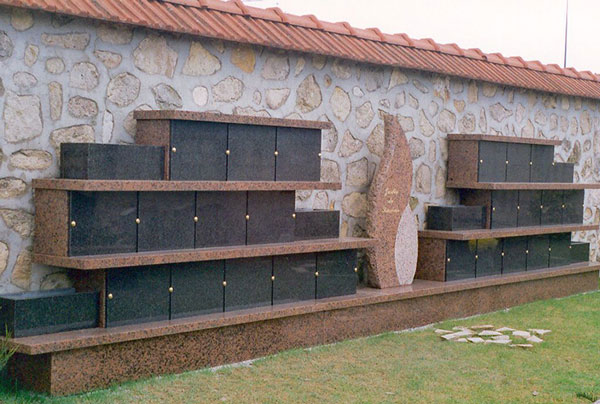
Since January 1, 2013, all municipalities with a population of 2,000 or more have been required to set up at least one cinerary space in their cemetery. The garden of remembrance, like the columbarium, is one of the elements of this space. How should it be laid out, and why invest in it?
The garden of remembrance: a collective space dedicated to ashes
After cremation, scattering the ashes isone of the options available to the family of the deceased. The ashes are collected in a cinerary urn, then given to loved ones. They are then scattered in a collective space dedicated to this purpose: the garden of remembrance.
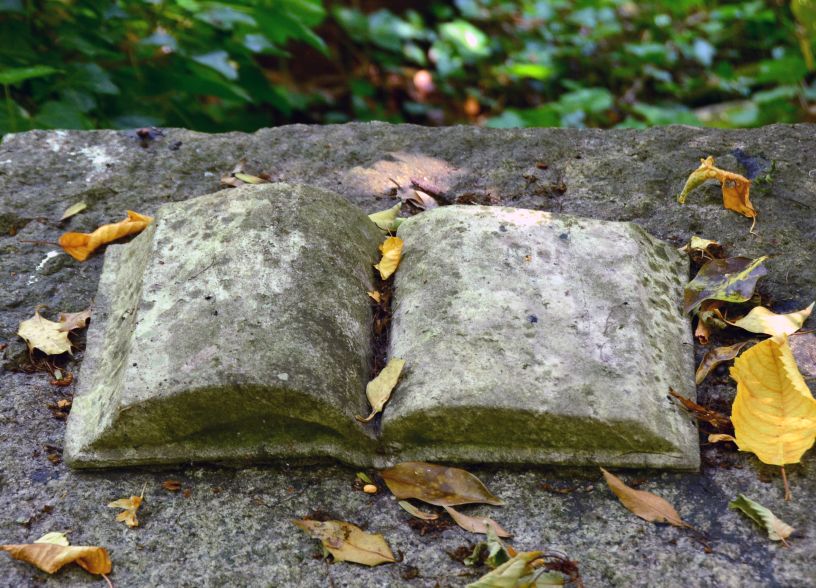
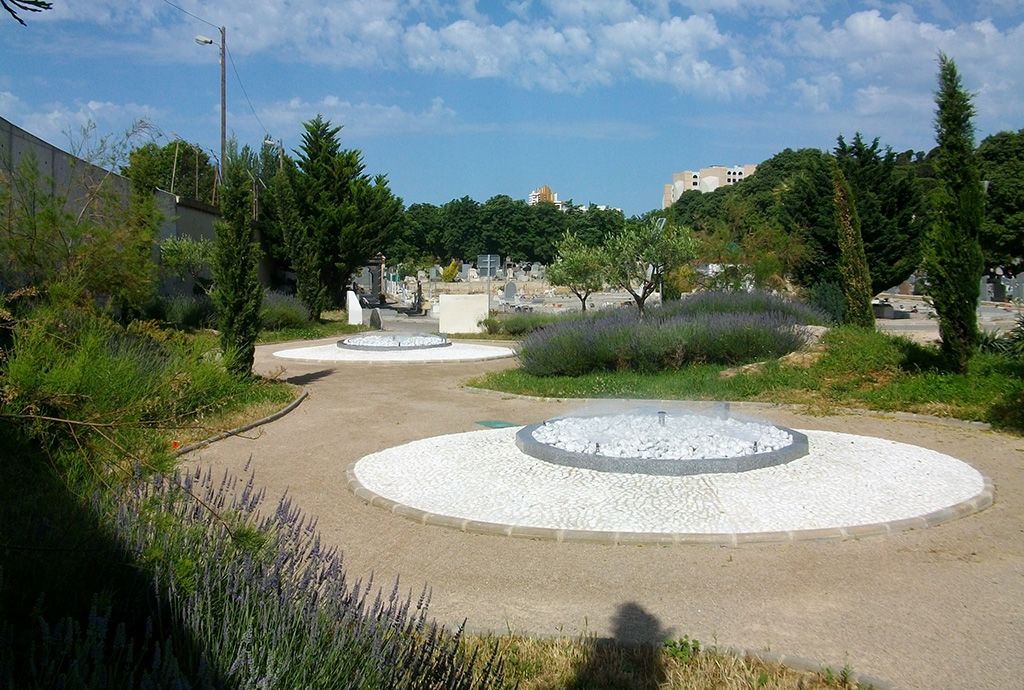
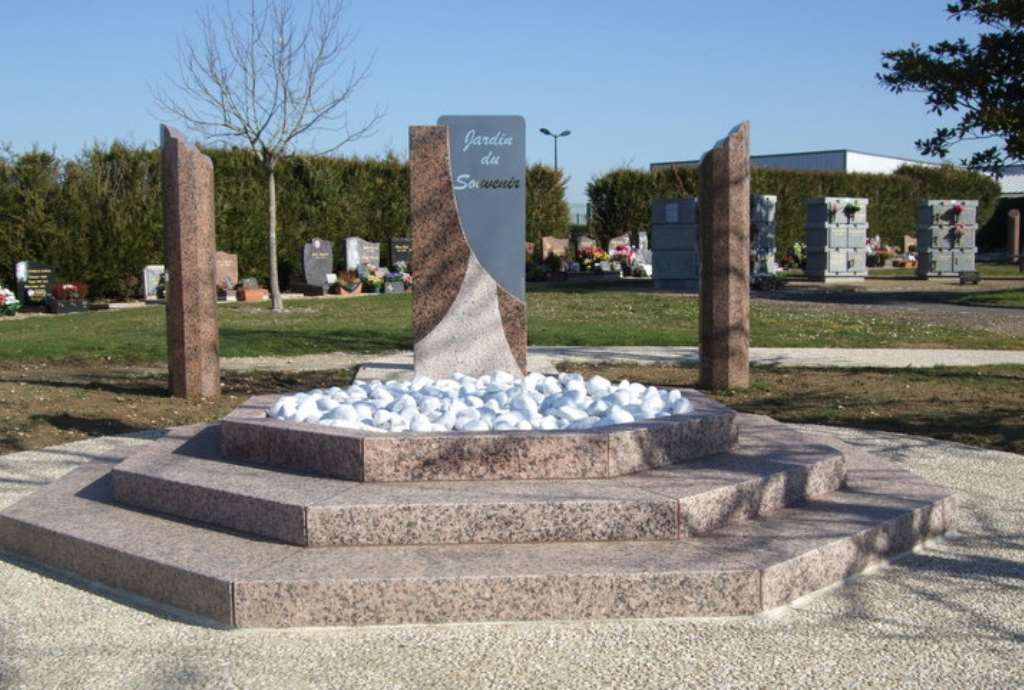
This cinerary space must be designed and laid out by the local council. It generally consists of a sump, marble pebbles and, in the majority of cases, granite borders, delimiting the scattering zone. A column or a book of remembrance is also included to record the identity of the deceased.
Some scattering areas are also equipped with a water sprinkling system, allowing the ashes to be carried under the pebbles and thus no longer visible on the surface. This is the case of the "Lacus Regia" that Granimond recommends to local authorities, so that their citizens can honor the ashes of their loved ones with dignity and respect.
It is also possible to replace this space with a remembrance basin. Less demanding to maintain, it allows ashes to be buried instead of scattered. Whatever the chosen method, the design of the memorial garden should be entrusted to a funeral specialist.
The garden of remembrance: a cinerary space that meets families' expectations
The creation of a memorial garden serves a dual purpose. Not only does it enable ashes to be scattered, it also serves as a memorial. Its use, free of charge, is increasingly sought after by residents. Cremation is becoming a common practice in France, and communes are now required to set up special areas dedicated to this practice.
While these facilities are essential to meet ever-increasing demand, they must also reflect the communities' commitment to careful planning.
The garden of remembrance should not only be a cinerary space designed for the scattering of ashes, but also a place for meditation and remembrance. It must be conducive topeace and rest. To make it more welcoming, the installation of signage is strongly recommended. It enables families to make it more tangible, thanks to a wide range of accessories evoking the memory of their loved ones.
To personalize this collective scattering place, Granimond offers municipalities the marking products that are essential for families' remembrance. Stele, book of remembrance, broken column or simple commemorative plaque, these elements all combine aesthetics and elegance. They are made entirely of granite, a noble material renowned for its robustness and used in the design of many prestigious buildings. Granimond also integrates granite benches, fountains and washbasins to make the garden of remembrance a welcoming and comfortable space.
The Granimond team