Incineration and cremation are terms frequently used when talking about funerals. They are often taken to mean the same thing, yet each has its own specific definition. It is essential to differentiate between these two practices, in order to use the appropriate vocabulary.
Incineration and cremation: what's the difference?
Incineration is a transformation technique involving the action of fire. It is used to treat waste by means of an incinerator. The term is often used incorrectly in the cinerary field: we don't incinerate a body, but household waste. This waste management process was developed in urban areas in the 1960s, to remedy the lack of sorting and to enable composting and recycling. It is therefore essential not to confuse the words incineration and cremation, which have very different characteristics.
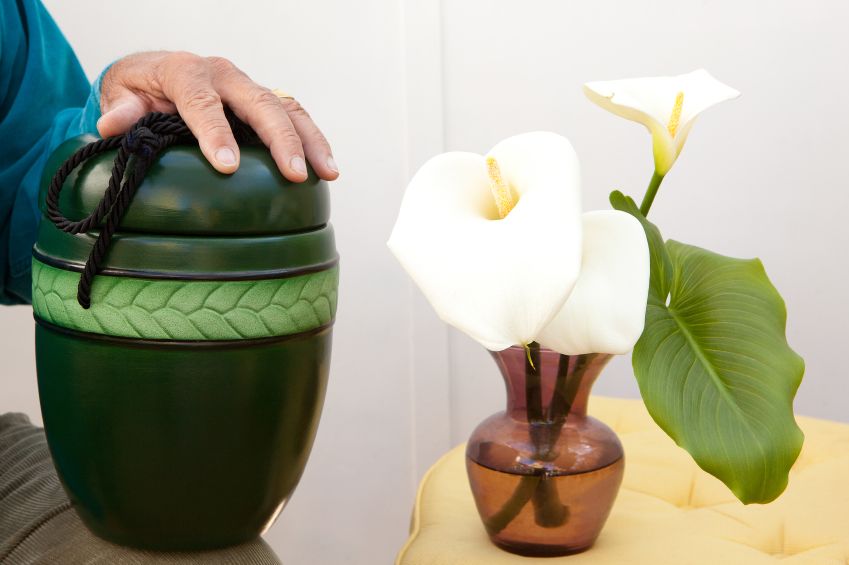
The word cremation comes from the Latin word "cremare", meaning to burn. Cremation is a funeral process in which the body of a deceased human being is burned and reduced to ashes. Thanks to the equipment used, cremation enables a decent and hygienic transformation of the body into ashes. The body of the deceased is placed in a coffin, which is then introduced into an oven previously heated to a temperature of 800°C. The body is then sublimated, i.e. transformed from a solid to a gaseous state. The ashes are then finely ground and collected in a cinerary urn.
In France, cremation has been authorized since 1887 and, after a slow start, has become an increasingly widespread funeral practice: in 2014, it accounted for 33% of funerals, and it is estimated that the cremation rate will reach 50% by 2020. Access to crematoria and the possibility of scattering ashes or conserving them in special cinerary spaces are certainly not unrelated to this rapid acceleration. This progression is also justified by the structuring and know-how of the professional sector. Granimond assists and guides local authorities in the creation and upgrading of quality cinerary spaces, to provide the best possible support for bereaved families.
Gardens of remembrance and columbaria: spaces dedicated to cremation
Since January1, 2013, cinerary space has become a legal obligation for communes with 2000 or more inhabitants.
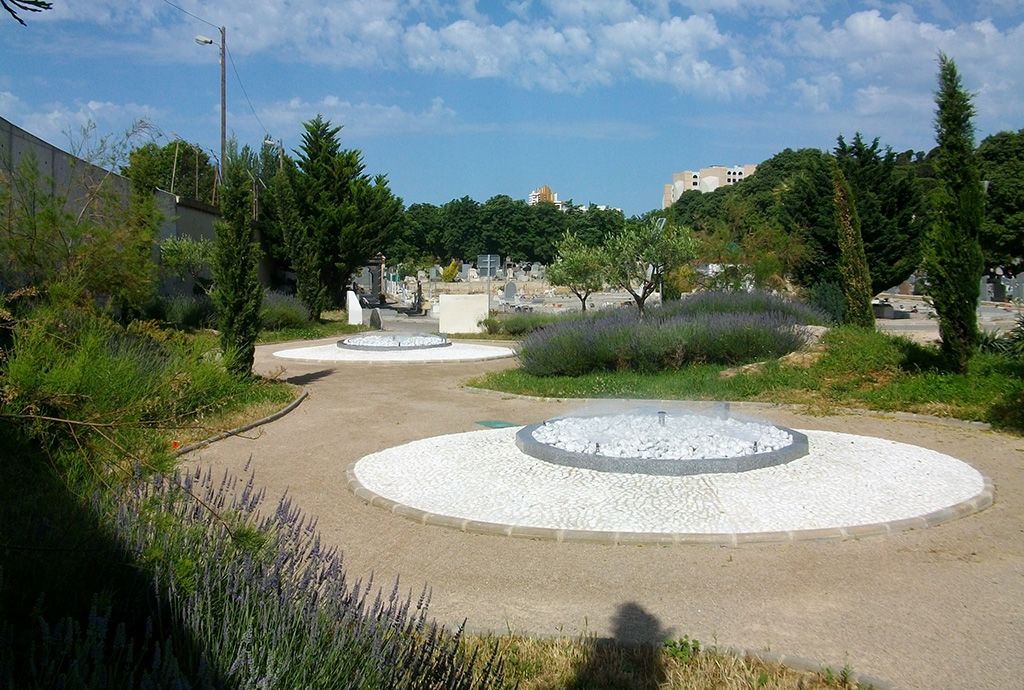
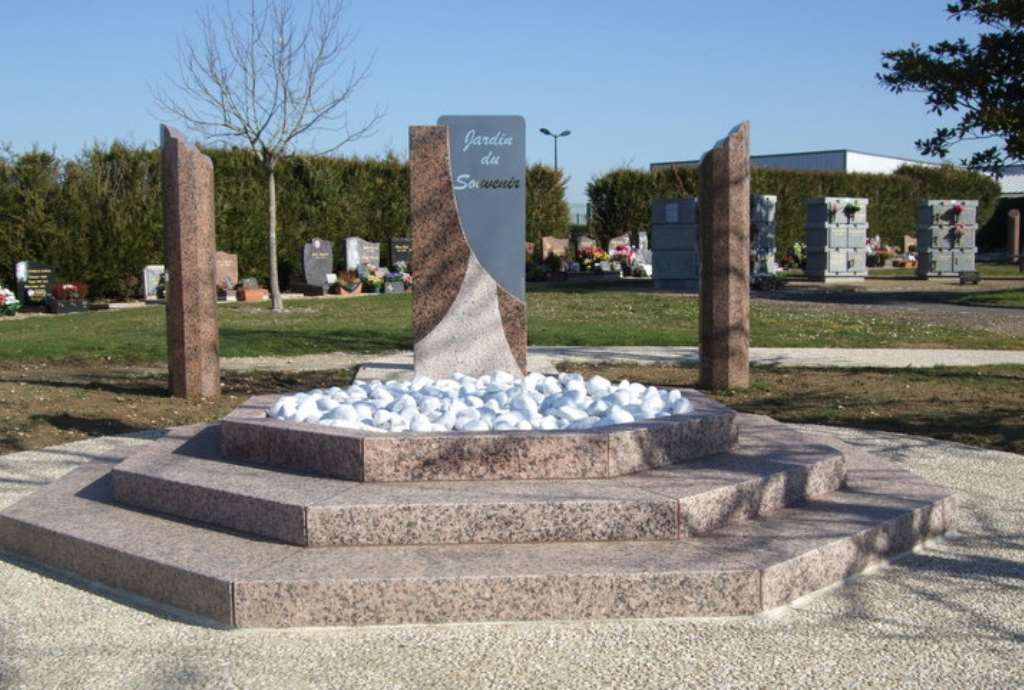
The remembrance garden is a space for scattering the ashes of the deceased. After cremation, the ashes are placed in a cinerary urn, which is then given to the person in charge of the funeral. The garden of remembrance is a place for families to reflect and respect the memory of the deceased.
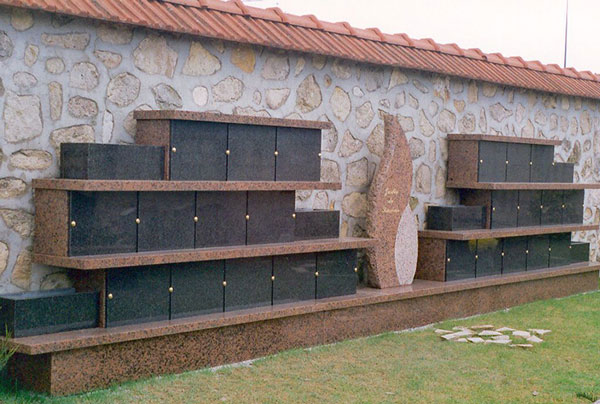
The columbarium is where cremated remains are deposited. It is composed of compartments that can accommodate a maximum of 4 urns. It is an above-ground monument that allows families to pay their respects and mark the place where their loved one is laid to rest. To pay homage to the deceased, it is possible to personalize the plot with a plaque fixed to the door, a photo, or to place flowers.
The Granimond team