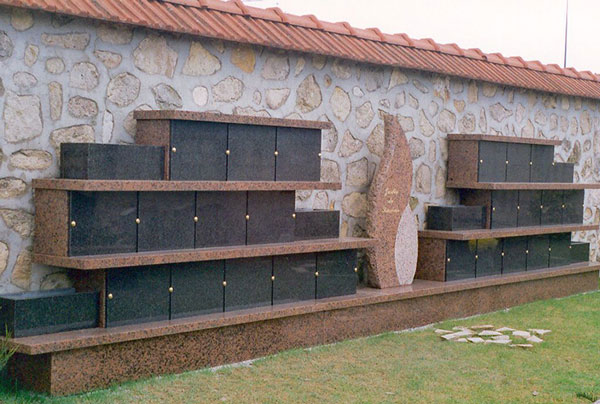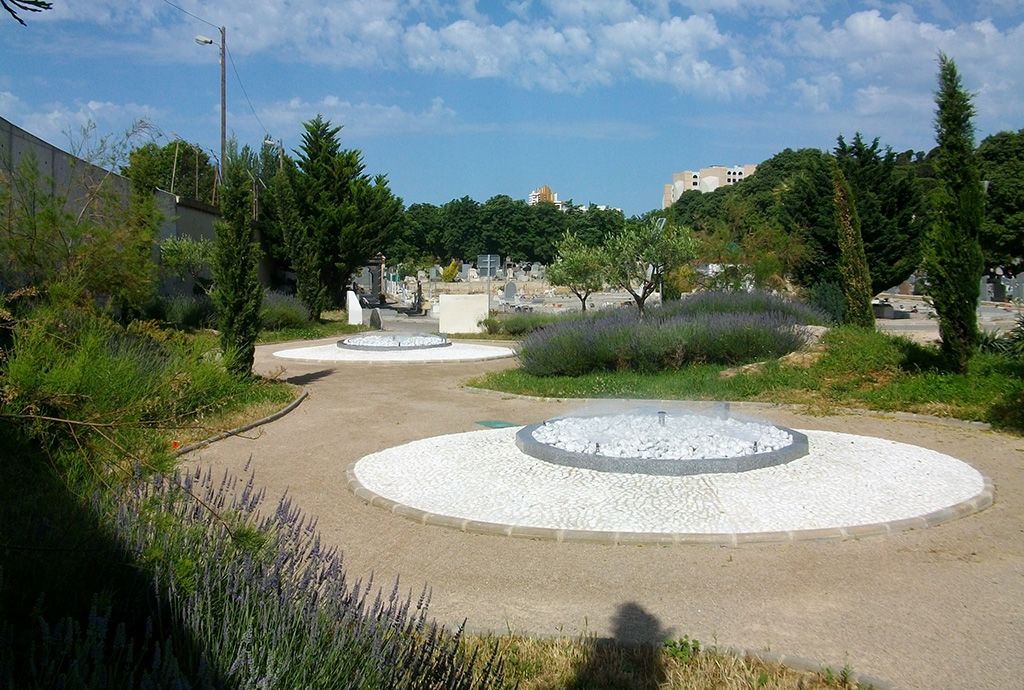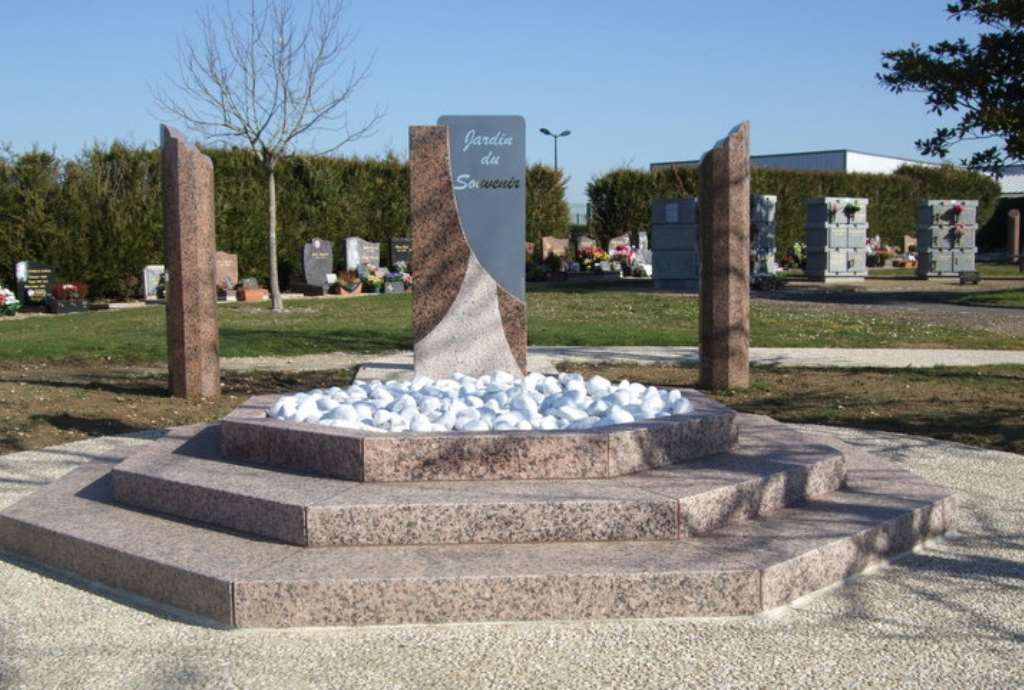
The columbarium is a funerary monument designed to receive and preserve cinerary urns. Whether located in the city or the countryside, the layout of this space must be carefully thought out by local authorities. A place of peace and contemplation for the loved ones of the deceased, it offers a hymn to life in a place of eternal rest.
While some columbaria were built decades ago, today we're witnessing the emergence of warm spaces where aesthetics and conviviality are perfectly combined in privileged settings.
Journey down the aisles of France's most beautiful cemeteries and columbaria.
The Père-Lachaise columbarium: a place of historical remembrance
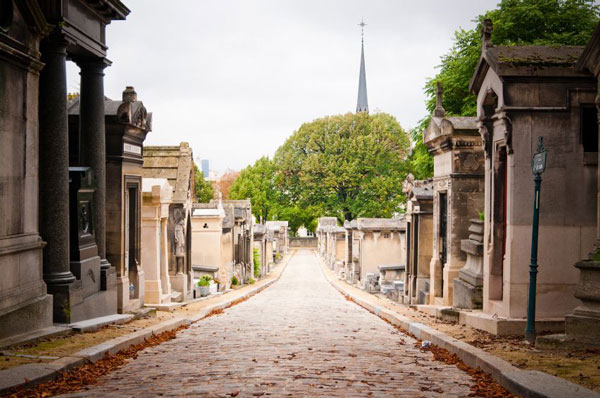
The Père-Lachaise cemetery, located in the 20th arrondissement of Paris, is the capital's largest cemetery. It takes its name from the Jesuit confessor to King Louis XIV, Father François d'Aix de la Chaise, known as Père La Chaise, who died in 1709. This prestigious necropolis extends over 44 hectares of verdant paths, where every style of funerary art is present, from Gothic tombs to Haussmann-style vaults and antique-style mausoleums.
The cemetery was officially opened for the first burial in 1804, but it wasn't until 90 years later that work began on the crematorium and columbarium, located in the heart of the cemetery, surrounded by greenery. Comprising a neo-Byzantine chapel, this was the first cinerary to be built in France and is now listed as a historic monument.
The columbarium, with its four levels (two outside and two underground), can hold over 40,800 cells. Among them are many celebrities, including singer Maria Callas, comedian Pierre Dac, resistance fighter Jean Moulin and composer and musician Michel Magne.
The anti-conformism of the columbarium inscription plaques is also of real interest. Artistically speaking, they display an uncommon boldness. The plaques feature a considerable variety of post-mortem messages, reflecting the modernity of today's funerary practices: images, paintings, mosaics, photographs that change with the seasons, works of art, children's drawings, signs of belonging to a passion, a region, and so on.
Every year, Père-Lachaise welcomes more than three million visitors who stroll the rugged, tree-lined paths of this immense English garden. Today, it is the most visited cemetery in the world.
The columbarium at the Sète marine cemetery: a place of serenity by the sea
The marine cemetery at Sète, in the Hérault region of France, enjoys an extraordinary view of the Mediterranean. It was originally intended to bury the first workers employed on the construction of the Môle Saint-Louis. Carved out in the 17th century on the southern slopes of Mont-Saint-Clair, it was initially known as Cimetière Saint-Charles, but its name was finally changed after Paul Valery immortalized it in his 1945 poem "Le cimetière marin" ("The Marine Cemetery"). The local man, who is buried there, made it an emblematic place, as did Georges Brassens in his song "Supplique pour être enterré à la plage de Sète", in 1966.
Located above the Theater of the Sea, it offers a unique panorama of the sea and the port, where sky and sea blend in a timeless atmosphere. Spread over 4 hectares, this multi-storey cemetery, built on former quarries, has a columbarium where calm and beauty emanate from this vast expanse that seems to have no limits.
The columbarium at the Grand Jas cemetery: an aesthetically pleasing place of remembrance
The Grand Jas cemetery, located in Cannes and opened in 1866, covers 9 hectares laid out in terraces. It succeeded the Suquet and Caroubier cemeteries, which had become too small, and is now the largest cemetery in Cannes. Its luminosity, landscaped architecture, rich statuary and abundant floral decoration make it one of the most aesthetically pleasing in France.
Considered one of the most remarkable necropolises to visit, the number of personalities laid to rest here brings back images of many of the departed, including writer Prosper Mérimée, actress Martine Carol, operetta tenor Georges Guétary and artists Fernand and Jacky Sardou, as well as numerous aristocratic families.
The Grand Jas cemetery is one of Cannes' most important heritage sites, where the columbarium is constantly being improved to welcome the loved ones of the deceased in the most soothing space for meditation and rest.
The Granimond team