As you know, communes and public inter-communal cooperation bodies with more than 2,000 inhabitants are required to comply with certain obligations under funeral legislation. Communes of this size are now required to have a cemetery and a cinerary.
The definition of a cinerary space can be difficult to pin down. That's why, in this article, we'll be answering the question: "What is a cinerary space?" We'll look at the legal definition of a cinerary space (or site), as well as the different elements that make up a cinerary space.
Cinerary space - what is the legal definition?
A cinerary space is a site designed to receive the ashes of the deceased whose body has been cremated. The characteristics of this space were defined in article 15 of law n°2008-1350 of December 19, 2008 (codified in art. L.22232 of the CGCT).
By law, a cinerary space must include :
- A columbarium
- A space set aside for the scattering of ashes (more commonly known as a "garden of remembrance"). The garden of remembrance must also be accompanied by equipment indicating the identity of the dead.
- Conceded spaces for burial of urns.
The columbarium
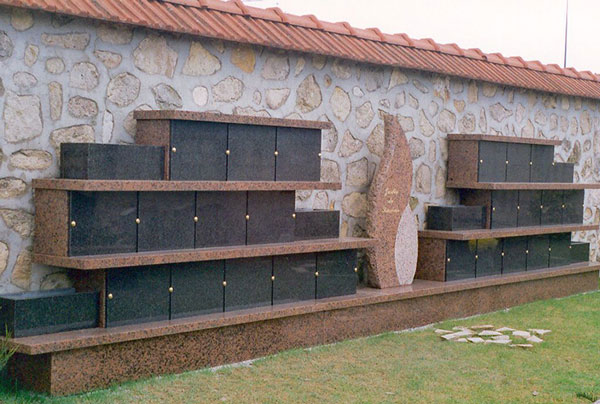
A columbarium is a cinerary monument composed of compartments. As mentioned above, it is one of the essential elements in the creation of a cinerary space. Following cremation, the columbarium's compartments are used to hold the urn containing the ashes of the deceased.
Features
Columbarium cells or niches can accommodate one or more urns, depending on the type of columbarium chosen: individual or collective. This choice requires careful consideration, and must therefore be made in advance by local authorities.
Aspect
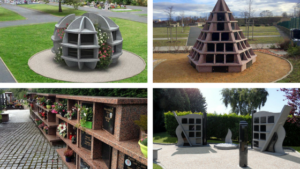
Although granite remains the most suitable material because of its noble, solid and long-lasting character, there are many different types of columbarium. Among the shapes on offer, you'll find :
- Column Columbarium
- Wall Columbarium
- Pyramidal Columbarium
- Spherical Columbarium
It is also possible to request a customized columbarium if your service provider offers this.
Remembrance garden - Space for scattering ashes
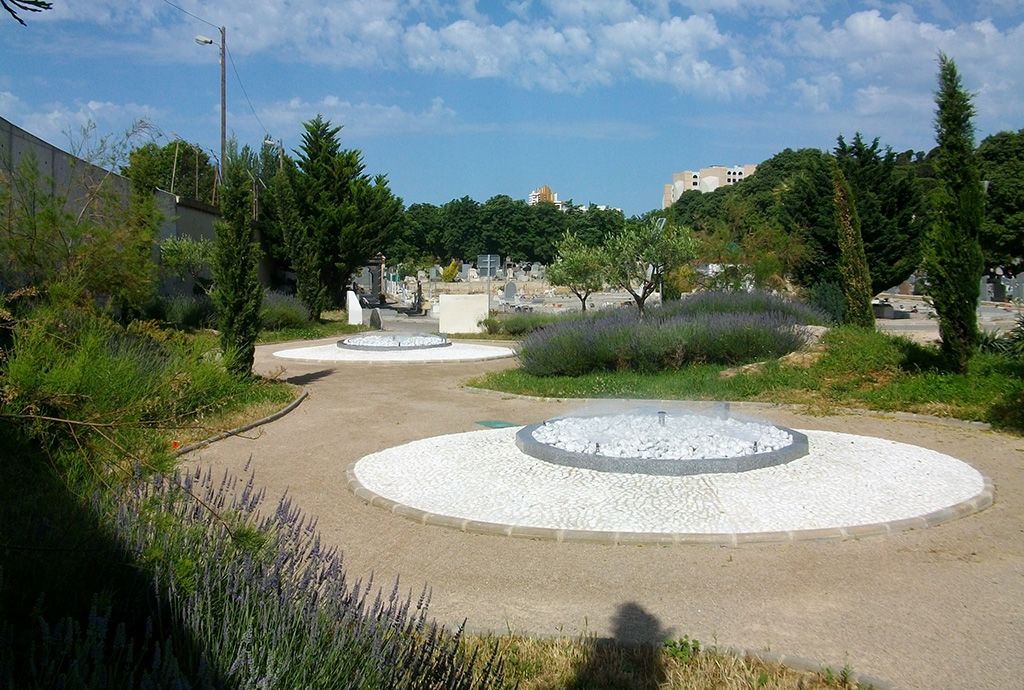
The garden of remembrance is a space where, unlike columbaria, ashes are scattered. This space is all the more important as it meets two legal obligations. Communes with a population of over 2,000 are required to provide this particular space, and authorized locations for scattering ashes are also specified by law.
Features
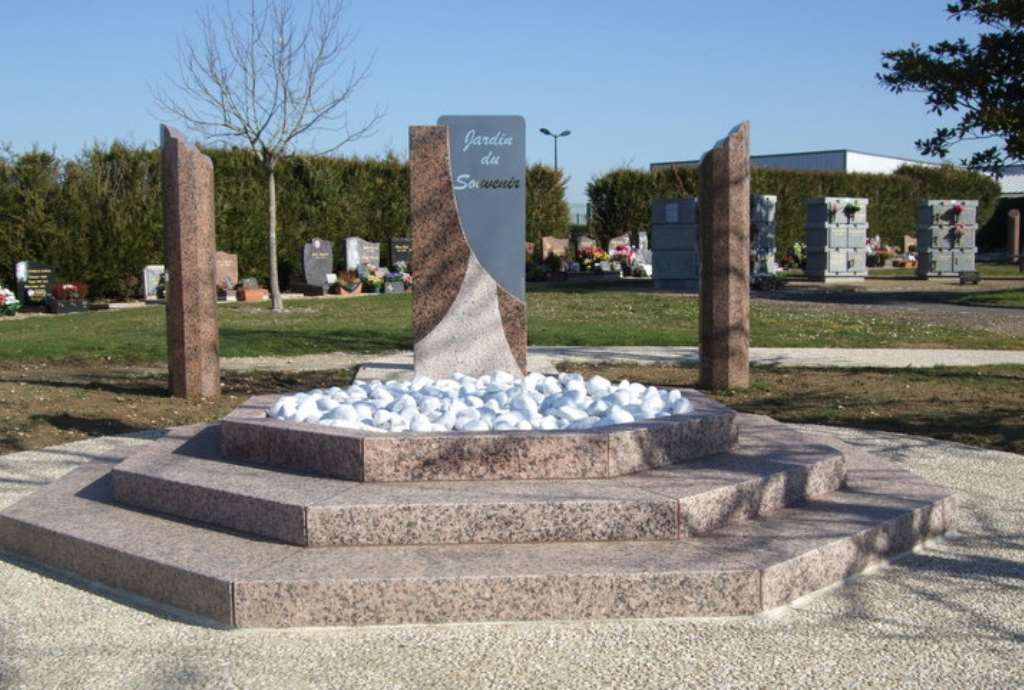
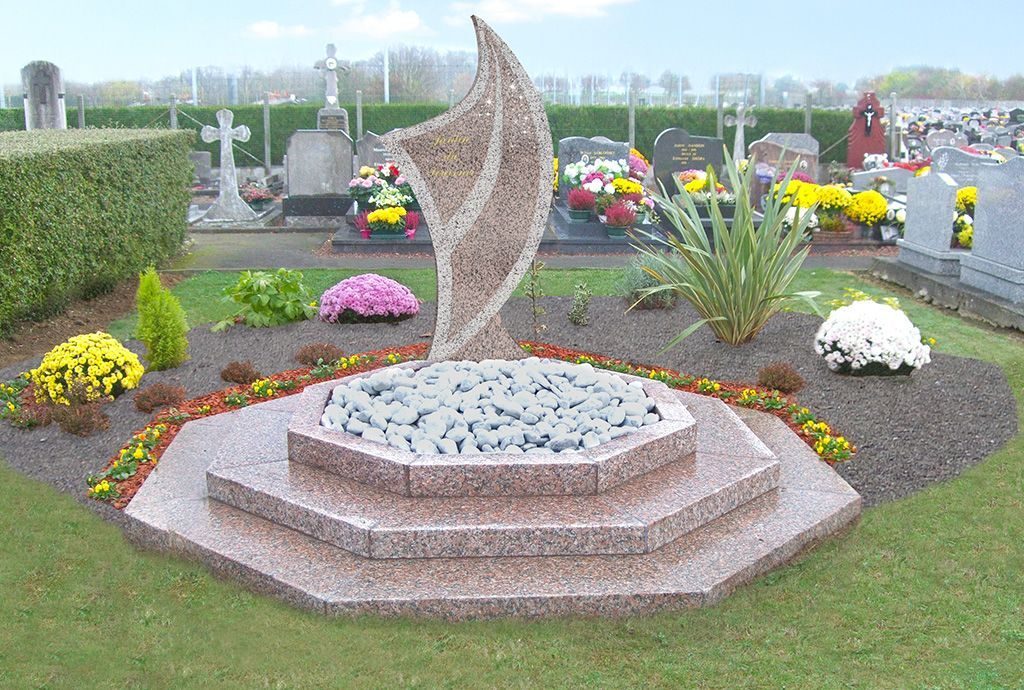
This space is composed of the following elements: a remembrance basin or a combination of a sump, a grid, pebbles and borders to define the space.
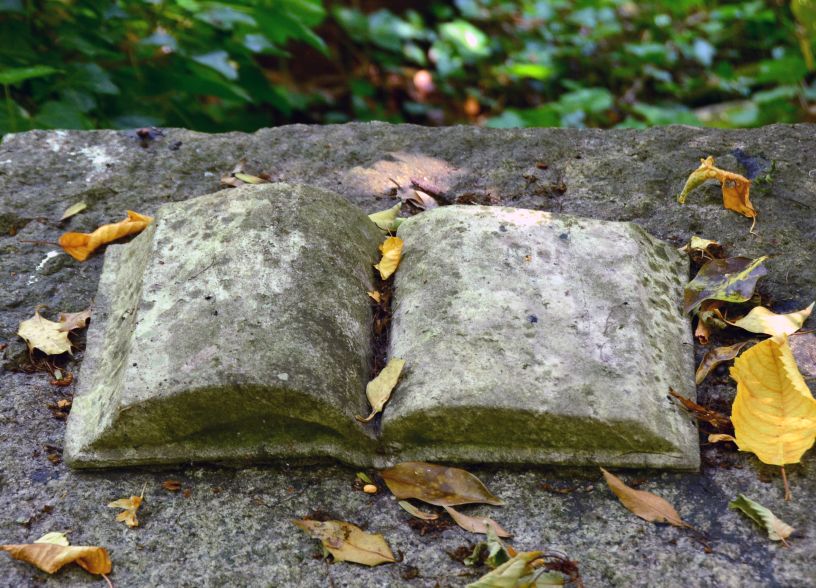
The garden of remembrance must also be equipped with a device for recording the identity of the deceased, such as a column or a book of remembrance.
Finally, the "Garden of Remembrance" stele can be used to personalize the space with a variety of symbols, while also indicating the site's purpose.
Aspect
Like the columbarium, the garden of remembrance is also mainly made of granite, notably for the borders delimiting the scattering space. The pebbles, however, are made of white marble. The shapes of this monument are also varied and customizable: hexagonal, octagonal, square, half-moon, with or without steps.
Spaces granted for the burial of urns
It is also possible to opt for a space dedicated to the burial of urns. The cavurne is an underground receptacle for a cinerary urn. Unlike columbaria, cavurnes require more floor space because they are underground and individual.
What's more, as the urn is buried in the ground, it is considered a conventional burial and therefore subject to the same management and regulations as a burial.