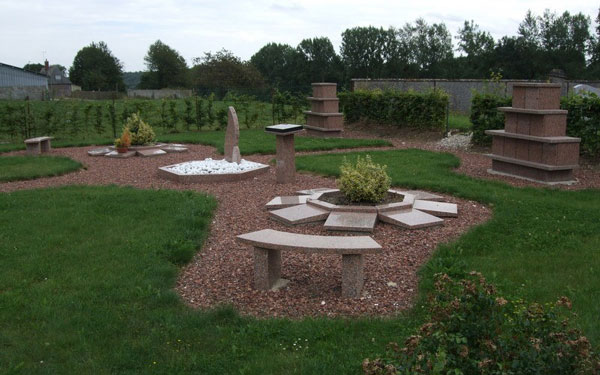
When a deceased person chooses cremation, determining the type of facilities to make available to families is essential. Your role - if you're a member of the municipal council - is to choose which cinerary monuments to install in cemeteries, in order to best comply with legislation and the wishes of local residents. Why not start by choosing between a columbarium and a cemetery niche? Granimond takes stock.
How to optimize cemetery space with a columbarium?
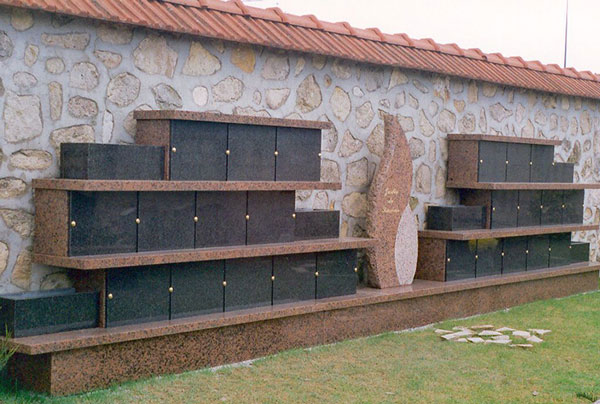
A columbarium is a cinerary monument designed to hold urns containing the ashes of the deceased. It is composed of individual, secure compartments, each of which can accommodate one or more urns. Most columbariums are made of granite, a noble material that is virtually unaffected by the passage of time.
The installation of a columbarium in a cemetery offers a number of advantages. Not only does this monument meet the ever-increasing expectations of residents, it is also an ideal response to a preoccupation of many town halls: the management of cemetery space.
As the columbarium is built in a semi-elevated or elevated position, it offers significant space savings, avoiding the need for elected officials to request plot extensions. As town councils are required to provide sufficient space to accommodate the deceased, the installation of a columbarium considerably facilitates cemetery management.
What's more, as these cinerary monuments are modular and can be made to measure, they offer a wide range of design possibilities, allowing you to combine a variety of shapes and sizes, combining aesthetics, quality and durability.
Need help making your choice? Contact our team!
The cavurne: a cinerary monument of remembrance
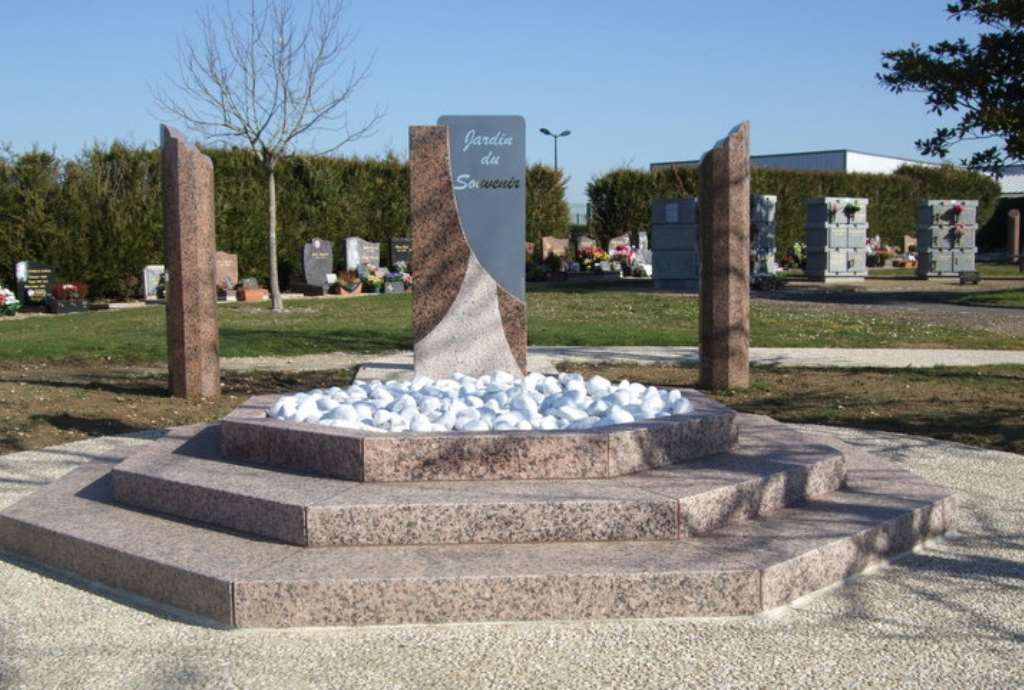
Like the columbarium, the cavurne is designed to hold the ashes of the deceased. Derived from the contraction of the words "caveau" and "urn", this small individual vault is built in the ground. It consists of a reinforced concrete cell that can accommodate one or more cinerary urns, a slab to close off access and guarantee watertightness, and an engraved slab, usually in granite, for floral arrangements. A memorial stele can also be installed.
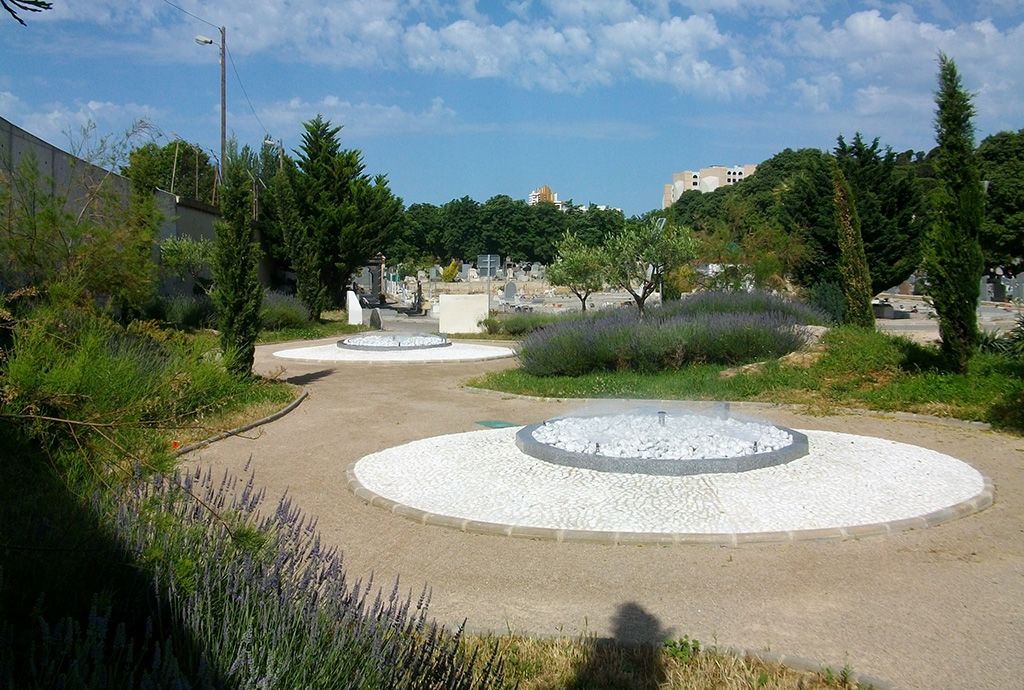
Cavurns offer a solution to the delicate issue of preserving the ashes of the deceased. Since the law of December 19, 2008 on funeral funeral legislationit is now forbidden to keep ashes at home. This small cinerary grave offers a much-appreciated alternative for the families of the deceased. Unlike the columbarium, which is communal, it is a private place of remembrance, particularly well-suited to landscaped cinerary spaces.
Nevertheless, the creation of a cinerary garden requires a relatively large area of land. While columbariums are built on the surface of the ground, in an elevated position, to save as much space as possible, the installation of cavurnes requires a larger area, preferably in an unspoilt, wooded setting.
Columbarium or cavurne: what you need to know
Columbarium or cavurne... The choice is not always easy for municipalities. These two cinerary monuments are highly complementary. Each represents an undeniable asset for the creation of a cinerary space in perfect harmony with the expectations of the families of the deceased. Depending on the size of the plot available in your municipality, it is entirely possible to plan the installation of a columbarium and cavurnes.