
Since January 1, 2013, it has been compulsory for all communes (and groups of communes) with a population of 2,000 or more to create at least one cinerary space, but it's important not to confuse a remembrance garden with a columbarium. One is reserved for scattering ashes, the other for storing them. Town halls must be careful to distinguish between the two, so as not to mislead their constituents and to provide them with the best possible support.
The garden of remembrance: the space for scattering ashes
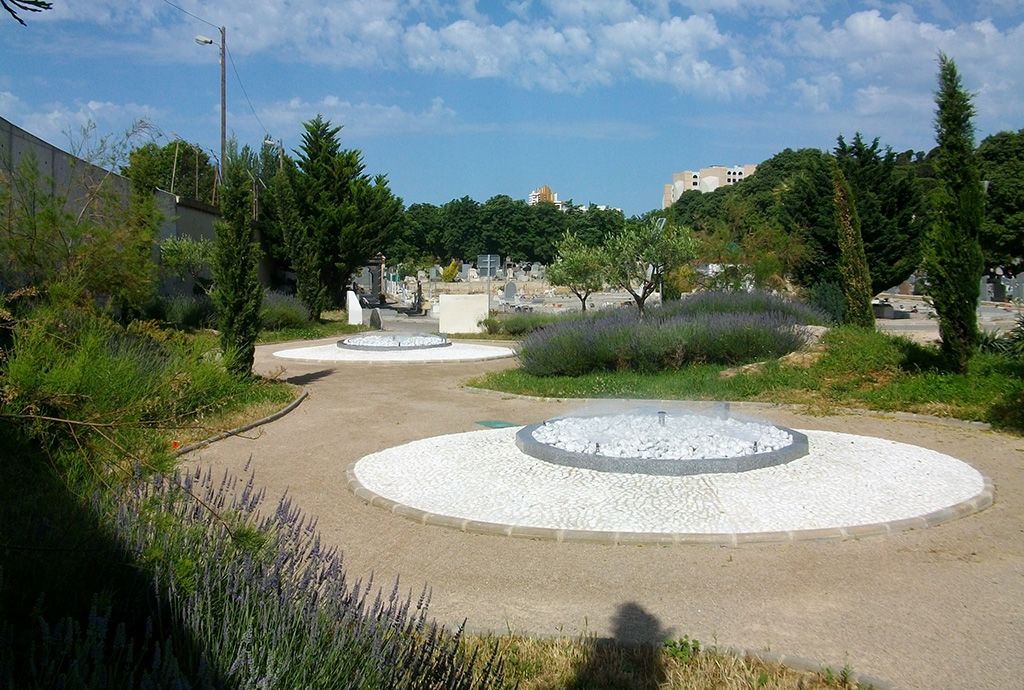
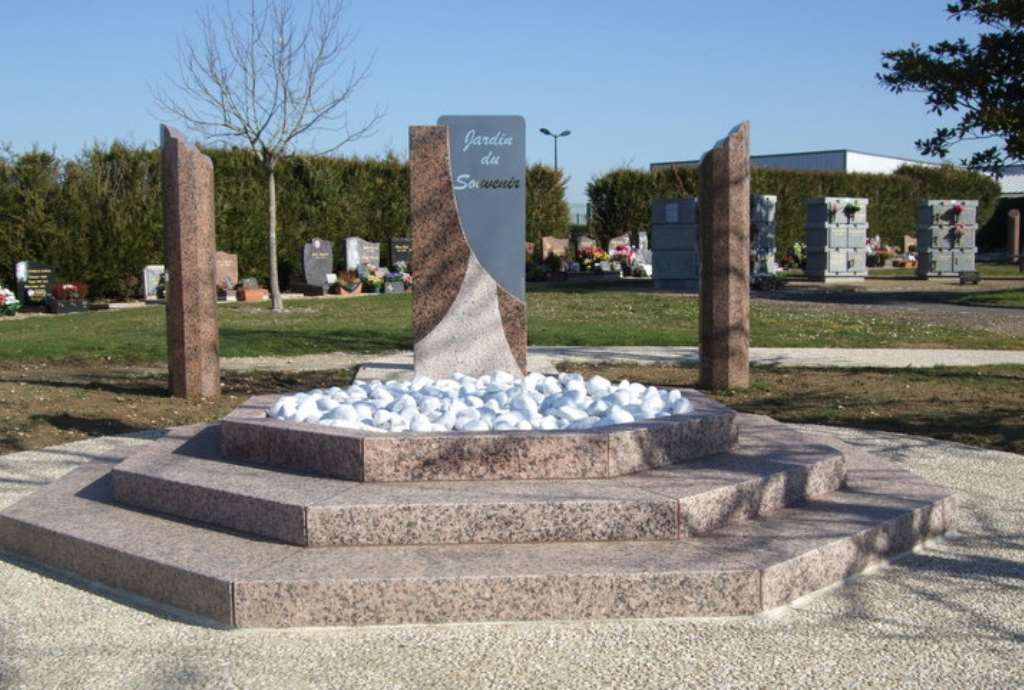
The memorial garden is a cinerary space dedicated to the scattering of ashes in a cemetery. Its purpose is twofold: to enable the ashes to be scattered and to preserve the memory of the deceased. After cremation, the ashes are collected in a cinerary urn and handed over to the person in charge of the funeral. They are then scattered in a scattering space, consisting of a sump and marble pebbles, bounded by borders of various shapes (hexagonal, octagonal, etc.). This space can also be replaced by a remembrance basin, less demanding to maintain, allowing the ashes to be buried rather than scattered.
It is important to note that the scattering of ashes is free of charge, but a request must be made to the town hall of the cemetery concerned.
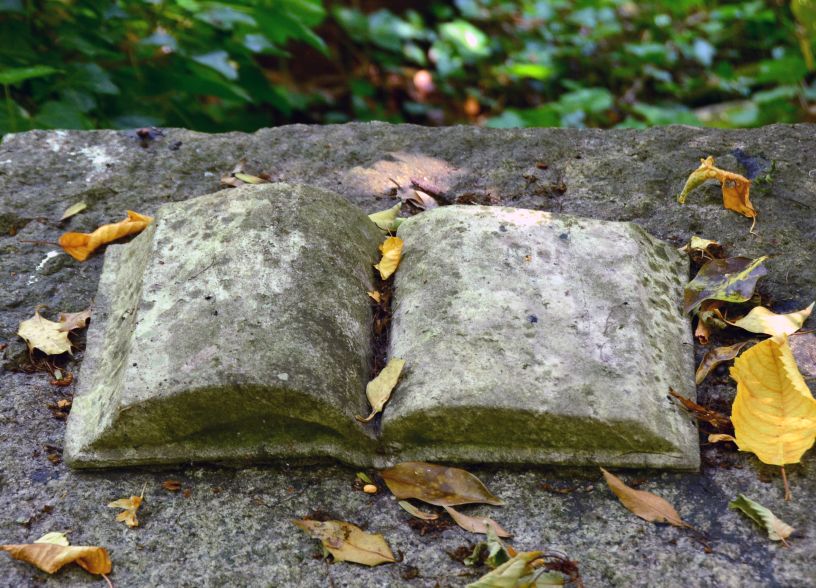
This cinerary space is also a place of meditation for families, as the scattering of ashes should not erase memories. It must be designed and laid out as a place of remembrance, so that loved ones can find solace and comfort. Signage is essential in every memorial garden. It is essential for families to be able to pay their respects. This signage can be made up of a wide range of accessories : a stele with the words "Jardin du Souvenir" (Garden of Remembrance) listing the identities of the deceased, a book of remembrance, a broken column, benches and fountains, etc.
To build a memorial garden, you need to call in a funeral specialist.
The columbarium: a place to store ashes
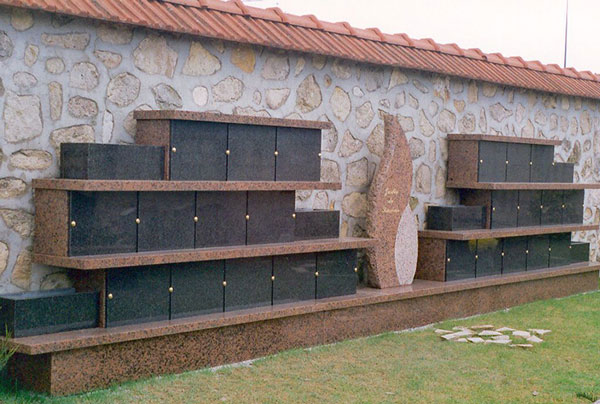
The columbarium is a cinerary space dedicated to the storage of ashes. After cremation, ashes are also collected in a funerary urn, but unlike a memorial garden, this is then placed in a columbarium cell. The columbarium is generally made of granite, and can accommodate one or more urns. Its door is adorned with a plaque listing the name(s) and dates of birth and death of the deceased. A columbarium can only be used as part of a concession. Requests must be made to the town hall of the commune concerned.
Columbariums come in a variety of colors and shapes, and are collective or individual granite structures built above ground, requiring a professional to create them.
This cinerary space is ideal for families to reflect. Well laid out, it is a soothing place for sharing and remembrance, where numerous accessories can be installed: granite benches, fountains and hand-washing basins, inscription plaques, memorial tables, signage and more.
Before cremation, it is therefore important for families to decide on the urn's destination. Whether the urn is placed in a columbarium or the ashes are scattered in a garden of remembrance, the creation and upgrading of cinerary spaces is the responsibility of an expert. Since 1981, our know-how has enabled us to help more than 600 local authorities bring their projects to fruition.
The Granimond team