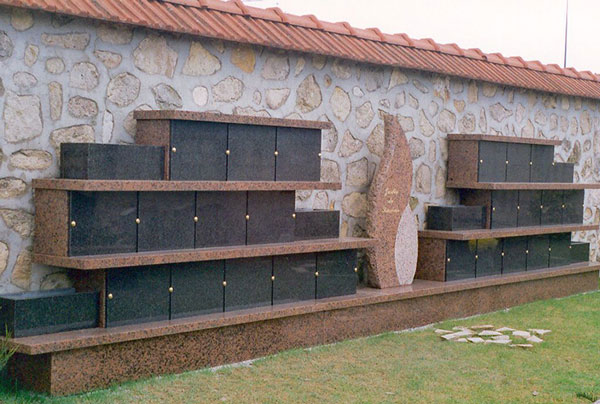
Columbarium is a word derived from the Latin, columba, meaning "pigeon hole". But did you know that columbaria are cinerary monuments inherited from Ancient Rome? In those days, it was unthinkable to have a dead body without a grave. They represented a grave danger for the living, at least for the more affluent social classes.
Journey back in time to ancient Rome.
Funerals in Ancient Rome: cremation, a lavish and common rite
The highly religious Romans were particularly superstitious and fussy about their funeral rites. The purpose of these ceremonies was to prevent the souls of the dead from wandering restlessly, so that they could not come and torment their families. However, the pomp and splendor of these rites depended on social class. The poorest, such as slaves, were most often buried or thrown into mass graves, while cremation was a highly privileged ritual for the wealthiest.
After a farewell ceremony and the cleansing and exposure of the deceased, cremation took place. The body of the deceased, dressed in a toga and lying on a funeral bed surrounded by flowers and garlands, was then placed in an uncovered coffin and taken to the cremation ground. Accompanied by musicians, dancers, mourners and pantomimes, family members followed him to the foot of the pyre. Relatives would then attend the ceremony until the end of the burning, and deliver a funeral oration in memory of the deceased.
The cremation of the wealthiest was also reflected in the quality of the ashes. Whereas the ashes of other cremators were made up of bone fragments identifiable as human bones, those of the wealthiest were reduced to a fine white dust. The cinerary urns were then placed in a columbarium.
Ancient Rome's columbaria, places of eternal rest
In Ancient Rome, columbaria were built partly or entirely underground on public land, the Ustrinia, for the cremation of the dead. As cities had to remain pure, these plots were located along Roman roads, in places sanctified by priests.
These underground buildings, with small niches dug into the walls to hold cinerary urns, were adorned with commemorative plaques or sculptures bearing the effigy of the deceased. Friends and relatives could also place offerings, such as jewelry, to honor the deceased's life in the afterlife. Varying in size, the largest columbaria had staircases leading to upper galleries capable of holding several hundred urns.
Columbaria were also very popular with Roman citizens, as they saw them as an inexpensive way ofensuring the transition between life and death. Some of the wealthy even granted their slaves the privilege of being cremated and storing their ashes in one of these cinerary monuments. At the time, cremation was the most common funeral practice. But from the 2nd century onwards, the arrival of Christianity gradually imposed burial. Among the most famous columbaria of Ancient Rome are that of Pomponius Hylas along the Apian Way, renowned for its wealth of precious frescoes and mosaics of the period, that of Tiberius Claudius Vitalis and that of Vigna Codini.
The Granimond team