
Cemetery management is the responsibility of the local council. Whether it's a question of maintenance, development or extension, the role of the town hall is essential, and it is the privileged contact for all citizens.
In addition, since the law of December 19, 2008 requires all communes with a population of 2,000 or more to have at least one cinerary space by January1, 2013, elected officials must be able to guide and inform their constituents about these sites, using coherent and appropriate language.
Incineration and cremation: how to talk to your constituents?
In everyday language, the word cremation to designate the reduction of the body of the deceased to ashes. However, this term is inappropriate, as incineration is in fact a combustion process used to treat waste. Household and industrial waste is burned to reduce its mass and volume, with incineration allowing the material to decompose.
It's therefore essential to use the right term when talking to local residents: cremation, not incineration. Cremation is the only funeral technique that allows the body of a deceased human being to be burned and reduced to ashes. Many people therefore mistakenly refer to cremation as incineration.
The compulsory installation of cinerary spaces amplifies the need to use language adapted to the cinerary domain.
Since January 1, 2013, the creation or development of mandatory cinerary spaces in cemeteries has meant that local authorities have had to explain, advise and guide residents who decide to opt for cremation. It's by using the right vocabulary, the one used by cinerary professionals, that the information given to families of the deceased will be accurate, and that town halls will be better informed to have a space that meets current standards.
A cinerary space must be composed of two elements:
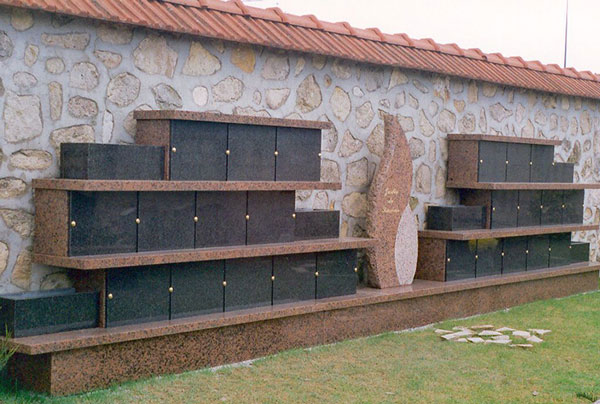
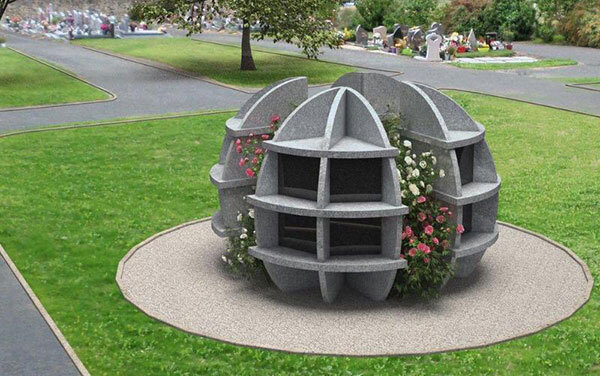
- The columbarium The columbarium: a monument of various possible shapes (straight, pyramidal, columnar, spherical, circular, etc.) with compartments for cinerary urns, i.e. urns containing the ashes of cremated remains. Unlike sepulchres, columbariums are placed above ground. A columbarium cell can hold up to 4 urns, and is usually made of granite. The cell door is usually adorned with an inscription plate listing the first and last names of the deceased, as well as their date of birth and death. The columbarium requires the purchase of a burial plot, generally for a period of 15 to 30 years, issued by the town hall, hence the importance of knowing the right words to use when advising the families of the deceased.
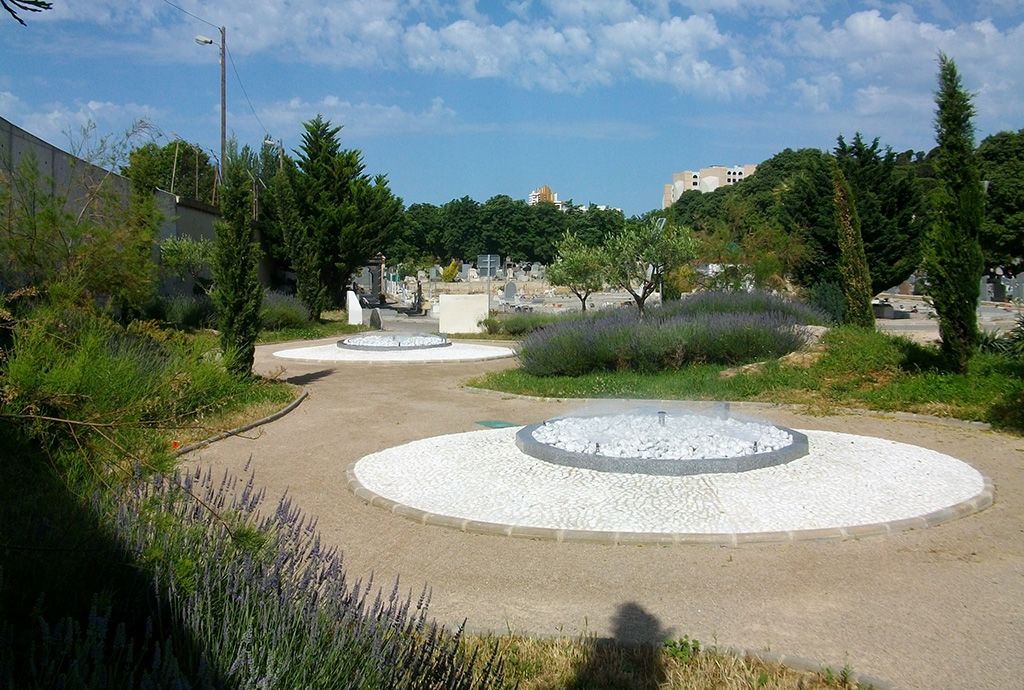
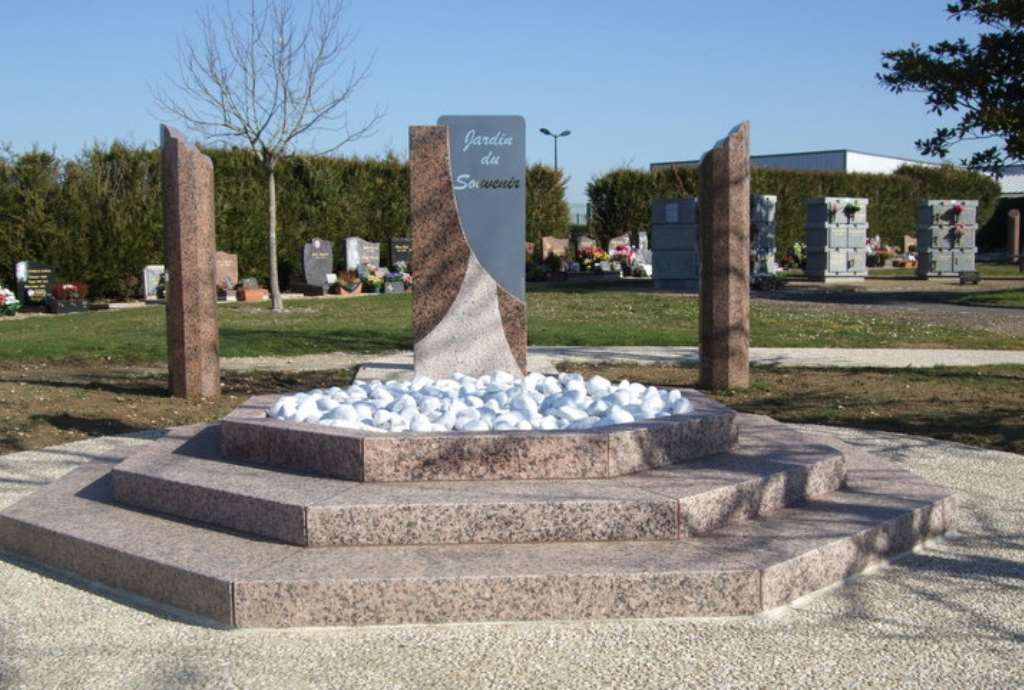
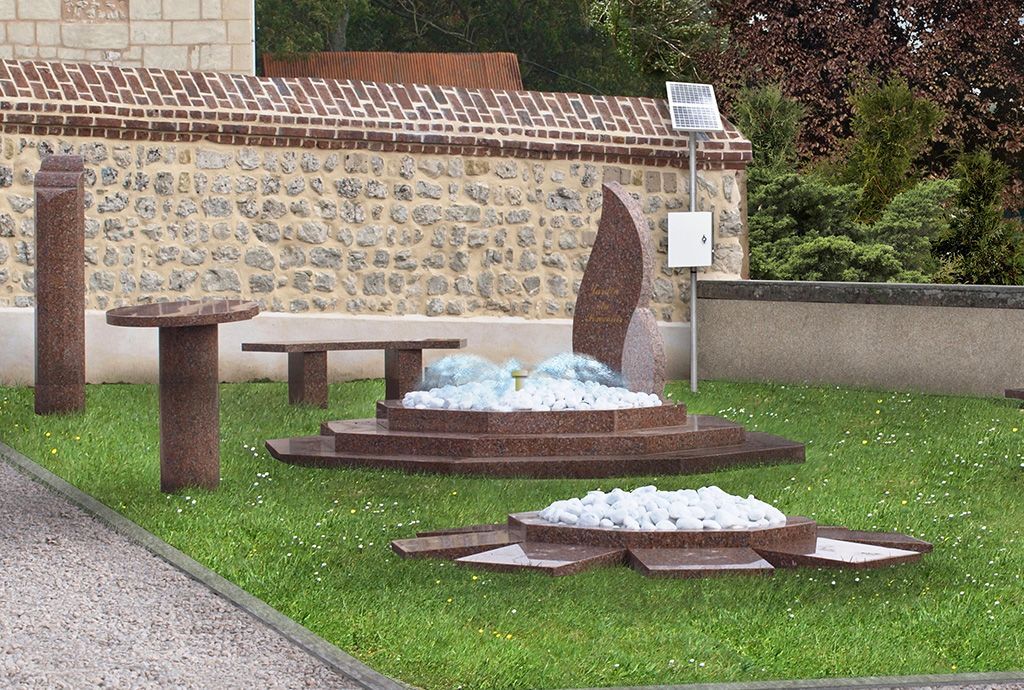
- Remembrance garden: for scattering the ashes of the deceased, which have been collected in a funerary urn after cremation. The scattering space consists of a remembrance basin or a combination of a sump, pebbles and borders. The scattering of ashes does not always allow families to fix a place of remembrance, so it is possible to engrave the name of the deceased on an identification plaque.
The Granimond team